

 English
 العربية
 Español
 Русский
Industry News
Industry News

Cement plants and concrete batching facilities are among the most power-hungry operations in the construction materials industry. A single interruption to a kiln drive, a mixer, or a batching control system can waste an entire batch of concrete, stall a delivery schedule, and in the worst cases damage equipment that costs more to repair than the power outage itself. That is why a correctly specified diesel generator set is not an optional accessory for a cement plant — it is core production infrastructure. This guide explains how cement and concrete producers should assess loads, size a diesel power generator, choose between open frame, canopy, and containerized configurations, and what to check when sourcing heavy-duty gensets from a China diesel generator manufacturer such as Longhong Power.
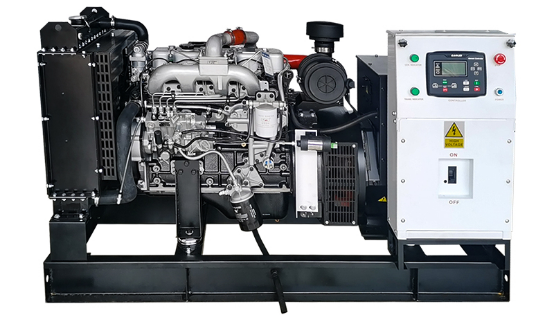
An open frame diesel generator set — the workhorse configuration for cement plant power houses and covered generator rooms.
Cement production is a continuous thermal process. Kilns operate at around 1,450°C, and an unplanned shutdown does not simply pause production — it can warp kiln shell sections, damage refractory linings, and clinker solidify inside the burning zone. Restarting after a hard stop often takes days and consumes significant fuel to re-heat the system. For a diesel power plant acting as backup, the requirement is not just "keep the lights on" — it is "keep the process alive."
Concrete batching plants face a different but equally costly failure mode. Concrete is time-critical: if a mixer drum stops mid-cycle or a truck loader halts, the batch can begin to set inside the equipment, and cleaning hardened concrete from a mixer or pump line is expensive and labor-intensive. A reliable industrial emergency diesel generator that restores power within seconds protects both the batch in progress and the machinery itself.
Consider a typical mid-size batching plant producing 60–90 m³ per hour. A one-hour outage during peak delivery season can mean 40+ truck loads delayed, contractual penalties, and wasted raw materials. Against that backdrop, the capital cost of a properly sized standby diesel generator is usually recovered by preventing a single serious incident. Facilities that want to review real installations can browse the 500KVA silent generator case study to see how a large institutional site was powered by a single Cummins-powered set.
Before contacting any supplier, buyers should map loads into tiers. This discipline — the same approach used for any serious engineering emergency diesel generator set project — determines what the genset must carry and what can be shed.
Crushers, ball mills, conveyors, mixers, and aggregate feeders. These can tolerate short delays and staged restarts, and many plants deliberately sequence them onto the generator in waves rather than starting everything at once.
Administrative offices, yard lighting beyond safety minimums, and comfort HVAC. These are connected only when genset capacity allows, or dropped entirely during emergency operation.
For smaller ready-mix yards and mobile batching setups, loads often fall in the 20–100 kW range, which is where products like the 100kW diesel generator and the 80kW silent diesel generator fit comfortably. Larger integrated cement works typically need multiple sets running in parallel, which is a switchgear and control discussion rather than a single-machine purchase.
Cement and concrete plants are dominated by induction motors — conveyors, mixers, crushers, fans — and motors are the single biggest sizing trap. A motor drawing 30 kW at full speed can demand 6–8 times that current for a fraction of a second when started direct-on-line (DOL). A genset sized only to running kW will stall, and a stalled genset carrying a batching plant is as bad as no genset at all.
A ready-mix batching plant has a 22 kW mixer motor (DOL), a 15 kW conveyor (DOL), a 7.5 kW water pump (soft start), batching controls of 3 kW, and lighting of 4 kW. The buyer stages the start: controls and lighting first (7 kW), then the pump (about 11 kW demand during start), then conveyor (peak ~60 kW during DOL start, ~15 kW running), then the mixer last (peak ~130 kW during DOL start, ~22 kW running). Because starts are staggered, the genset sees the mixer's inrush on top of the other machines' running loads — roughly 7 + 11 + 15 + 130 ≈ 163 kW of momentary demand. A 200 kVA (160 kW) set is marginal; a 250–300 kVA set handles the sequence comfortably. If the mixer gets a soft starter, a 200 kVA set becomes sufficient, often at a lower total cost than the bigger engine — which is why starting-method negotiation belongs in the genset conversation, not after it.
Load factor also matters. Running any diesel engine chronically below about 30% load causes wet stacking and carbon buildup. Aim for a genset that operates in the 50–80% band in normal standby mode. Buyers unsure between ratings should read the duty-rating explanation (standby vs prime vs continuous) before signing any contract, because the rating language defines how many hours and at what load the set may legally and mechanically run.
Cement plants are dusty, noisy places, and the right enclosure choice depends on where the genset lives.
An open frame generator is the most cost-effective and service-friendly option when the set is installed inside a dedicated, weather-protected power house with its own ventilation and silencing. Most integrated cement plants choose open frame sets in the 200–3000 kVA class for exactly this reason. The image below shows a typical unit; open frame machines are easier to inspect, repack, and overhaul in place.
A canopy diesel generator with 75 dB(A) at 7 m (or super-silent 68 dB(A)) enclosures suits batching yards near residential zones, urban ready-mix depots, and any site where a separate power house does not exist. Canopies are also weatherproof out of the box — important for remote aggregate quarries where no building is available. For a mid-size yard, the 32kW silent generator or the 64kW automatic generator covers controls, water systems, and lighting loads with room for staged motor starts.
A containerized diesel generator makes sense for temporary batch plants that follow large construction contracts — the container doubles as a weatherproof, vandal-resistant, transportable power module. Where the plant itself is mobile, a trailer type construction site generator or mobile trailer diesel generator moves between sites with the mixing plant. buyers can see a typical trailer-based deployment in the Weichai generator case study at 5,300 m altitude, which demonstrates how a mobile set supported heavy machinery in extreme conditions.
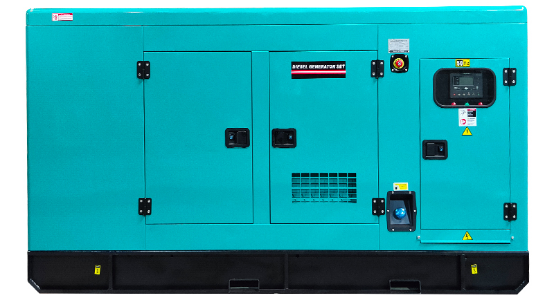
A 100kW silent canopy genset — a frequent choice for batching plant control rooms, water systems and yard lighting.
In a cement plant, seconds matter. The kiln control room may have UPS support for screens and PLCs, but the motors that keep material moving need an auto-start diesel generator tied to an Automatic Transfer Switch (ATS). A modern AMF (Automatic Mains Failure) controller detects mains loss, starts the engine, stabilizes voltage and frequency, and closes the generator breaker — all within 8–12 seconds when correctly configured.
Facilities with continuous thermal processes sometimes take the next step and parallel two gensets for N+1 redundancy, so a single engine fault never takes the plant down. That adds switchgear cost but transforms availability, and it is worth discussing with the manufacturer before the order rather than retrofitting later.
Fuel strategy is often the difference between a genset that rides out an outage and one that dies halfway through it. As a rule of thumb, a diesel genset consumes roughly 0.25–0.30 liters per kWh produced at realistic load factors, so a 250 kVA set carrying 70% load burns about 45–55 liters per hour.
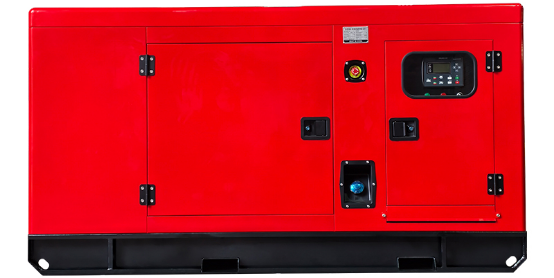
An 80kW weatherproof canopy genset — sized for medium batching yards, offices, water pumps and staged motor loads.
China remains the most competitive source for 20–3000 kVA generating sets, and brands like Cummins, Weichai, Yuchai, Perkins, Volvo, and Yunnei give buyers a genuine choice of engine tier and parts ecosystem. But price differences between suppliers reflect real quality differences, so industrial buyers should verify the following before wiring any deposit:
Ask for the engine's nameplate, serial number, and the authorization letter from the engine brand. Cross-check that the alternator is a recognized brand (Stanford, Leroy-Somer, Stamford-class, or equivalent copper-wound machine), because the alternator is what actually powers your motors during inrush events.
Insist on a full-load test at the factory before shipment, with video or third-party inspection. A set that has never run at load has not proven its cooling, AVR, or governor behavior. CE and ISO certifications are part of this verification — ask for the certificates themselves, not just claims.
Give the manufacturer your complete motor list with starting methods. A competent supplier will run a transient-load simulation or at minimum a starting-demand calculation, and will recommend an alternator margin for VFD harmonics if your plant uses drives.
Suppliers holding 200+ units of permanent stock — as the Longhong product catalog reflects across 3KVA–3000KVA — can deliver standard ratings in days instead of the 30–60 day build cycle, which matters when a plant is commissioning against a fixed construction schedule.
Confirm the spare-parts list (filters, belts, AVR, controller), the warranty term and its trigger date, and whether remote diagnosis support is offered. Longhong, established in 2010 in Guangdong with over 20 years of industry experience and exports to Cambodia, Vietnam, Myanmar, Tanzania, Libya and beyond, provides documentation and parts planning as part of every industrial order.
A cement or concrete batching plant's generator is not a commodity purchase — it is the insurance policy on a process where minutes cost thousands. Get three things right and the investment pays for itself: size for motor starting rather than running load, choose the enclosure that matches the installation environment, and buy from a manufacturer who will test, document, and support the set for its whole life. Whether the requirement is a single emergency diesel generator for a ready-mix yard or a parallel system behind an integrated cement works, working directly with an experienced source factory shortens the path from specification to running power.
Founded in 2010 in Guangdong, China, and backed by more than 20 years of engineering experience, Guangdong Longhong Electromechanical Equipment Co., Ltd. is a professional diesel genset manufacturer offering open frame, silent/canopy, trailer, and containerized generators from 3KVA to 3000KVA, powered by Cummins, Weichai, Yuchai, Perkins, Volvo, and Yunnei engines. With 200+ units in permanent stock, CE and ISO certification, and exports to Cambodia, Vietnam, Myanmar, Tanzania, Libya and other markets, Longhong delivers dependable standby and prime power for construction sites, factories, farms, hotels, and infrastructure projects worldwide. Explore the full range at the Longhong Power official website or learn more about the company.


