

 English
 العربية
 Español
 Русский
Industry News
Industry News

If you are evaluating a China diesel generator manufacturer for your next project, you already know the rewards of buying directly from a factory: competitive pricing, wide capacity range, and full customization. But you also know the risks: inconsistent quality, vague specs, language and logistics friction, and the occasional shipment that does not match the quotation. Drawing on more than two decades of OEM/ODM export experience from our own facility in Guangdong, this guide walks international buyers through the ten factors that decide whether a diesel generator set sourced from China becomes a long-term asset or a costly lesson.
Whether you are a project contractor in East Africa, a telecom operator in Southeast Asia, a procurement officer at a hotel chain, or a wholesaler looking for a reliable power generator private-label partner, the same ten checkpoints apply. Use this article as a decision framework before you wire a deposit.
The single most common pitfall in buying a diesel generator from China is dealing with a trading company that pretends to be a factory. Genuine manufacturers will openly share workshop photos, video walk-throughs of their assembly lines, and even live video calls. They will also list workshop size, production capacity (e.g. "200+ units in permanent stock"), and the number of technicians on their About page. At our company homepage you can see our 20+ years of manufacturing history dating back to 2010 in Guangdong — a verifiable footprint that trading intermediaries cannot match.
Quick red flags to watch for:
No physical address or only a virtual office listed.
Inability to name the engine and alternator suppliers they actually use.
Refusal to share production or QC videos on request.
Quotations that look suspiciously low — usually a sign of rebadged low-grade components.
Request their business license, ISO/CE certificates (mirrored on the qualifications page), a list of recent export destinations, and reference customers in your country if available.
A diesel genset is the sum of two core components: the engine and the alternator. Top-tier Chinese diesel generator suppliers offer multiple engine brand options so you can match your local service network and parts availability. Reputable choices include Cummins, Weichai, Yuchai, Perkins, Volvo, and Yunnei — each with distinct power, fuel-efficiency, and emissions profiles. Pair the engine with a quality brushless alternator (Stamford, Leroy-Somer, or equivalent Chinese OEM brands) and you have a diesel power generator that will run reliably for tens of thousands of hours.
Buyers in tropical Africa, for example, often prefer Cummins for its extensive service network. Buyers in Southeast Asia gravitate toward Weichai and Yuchai for cost-per-kilowatt value. Make sure the manufacturer provides a clear datasheet for both engine and alternator — not generic marketing photos.
The Deepsea, Smartgen, or ComAp controller is the brain of your standby diesel generator. Confirm brand and model number in writing. For auto-start diesel generator applications, the ATS (Automatic Transfer Switch) brand and amperage rating should also be specified.
There is no one-size-fits-all diesel generator. The four main configurations each serve a distinct use case, and picking the wrong one is the easiest way to overpay or suffer failures.
Open-frame diesel generator — Lowest cost per kW, designed for indoor plant rooms or sound-attenuated enclosures you build yourself. Common in industrial diesel power plant projects.
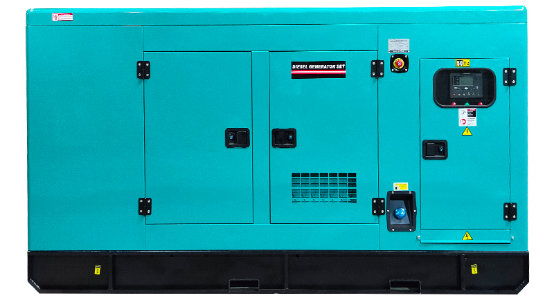
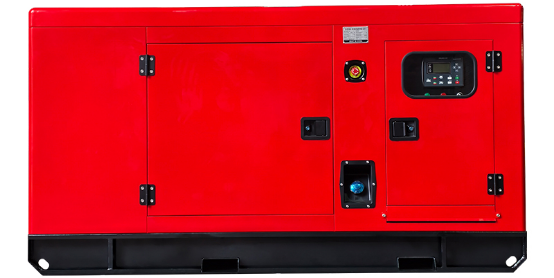
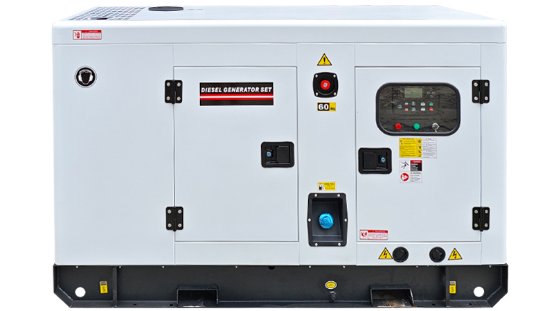
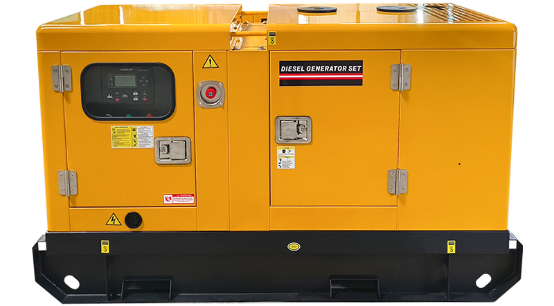
Silent / canopy diesel generator — Integrated weatherproof acoustic enclosure (typically 68–75 dB(A) at 7 m). The most popular choice for residential areas, hotels, schools, and small businesses. Browse our full range of silent canopy generator products to see options from 10 kW to 100 kW and beyond.
Containerized diesel generator — A 20-ft or 40-ft ISO container housing the generator, fuel tank, control panel, and exhaust silencer. Ideal for utility-scale diesel power plant installations, mining camps, and rental fleets.
Mobile trailer diesel generator — Wheeled chassis with lifting eye and road-tow certification. Perfect for construction site diesel generator set and trailer type construction site generator applications where the unit moves between jobs.
Undersizing is the fastest way to destroy a power generator. A proper load analysis accounts for running load, starting surge (especially for motors, compressors, and elevators), future expansion, ambient temperature derating, and altitude derating. A three-phase diesel generator for a factory load must include at minimum the kVA continuous rating at 0.8 power factor, the step-load capability, and the alternator's maximum single-step load acceptance.
For residential and small commercial use, a single-phase diesel generator from 10 kW to 30 kW is often sufficient. For commercial sites and light industry, expect 50 kW to 250 kW three-phase units. Anything above 500 kVA usually calls for paralleling multiple units or moving to a containerized diesel generator architecture. If you are unsure, ask the supplier to perform the sizing for you — a sign of a trustworthy factory.
Take the total running load in kW, multiply by 1.25 for the motor starting surge, then round up to the next standard generator size. Always leave 20–25 % headroom for load growth.
Reputable Chinese exporters carry CE for the European Union, ISO 9001 for quality management, and often SONCAP (Nigeria), COC (Saudi Arabia), or other destination-specific certificates. Each engine brand may also carry its own certifications. The list of certifications is a quality proxy: a factory that invests in CE, ISO 14001, and ISO 45001 has likely institutionalized its QC. Inspect the qualifications and certifications page to see what documentation you should request.
Ask for the test report before shipment. Every load-tested emergency diesel generator leaves the factory with a factory test certificate showing voltage regulation, frequency, oil pressure, coolant temperature, and exhaust temperature at 25 %, 50 %, 75 %, and 100 % load.
One of the biggest advantages of working directly with a China diesel generator factory is OEM/ODM support. Standard customization includes:
Canopy color in your corporate shade (RAL or Pantone).
Custom logo and model stickers on the canopy and controller.
Custom controller language (English, Spanish, Arabic, French, Russian).
Fuel tank capacity extension for extended-runtime power outage backup power generator duty.
Special alternator winding for 60 Hz, 480 V, marine, or harsh-environment specs.
If you plan to import under your own brand, confirm in writing that the manufacturer will not co-brand the unit or sell the same configuration under the same color to your direct competitors in your region.
Lead times vary dramatically. A standard 100 kW silent diesel generator with stock engine and alternator can ship in 7–10 days, while a fully customized containerized diesel generator may need 30–45 days. If the supplier carries 200+ units in permanent stock (as our company profile shows), they can often accommodate urgent orders within the same week.
For distributors and rental companies, stock availability is just as important as customization. Ask whether the manufacturer holds a buffer of common ratings — 20 kW, 50 kW, 100 kW, 250 kW, 500 kVA — so your replenishment orders are not held up by production scheduling.
A diesel generator manufacturer experienced in exporting to your region will hand you a complete document package, typically:
Commercial invoice, packing list, and bill of lading (or airway bill).
Certificate of origin (Form E for ASEAN, Form F for China-Pakistan FTA, etc.).
Engine and alternator test reports.
Warranty card and operation manual.
Spare parts list with part numbers and recommended stock.
Standard warranty is 12 months or 1,000 running hours, whichever comes first. For standby diesel generator applications, ensure the warranty terms also cover low-hour standby use. Confirm whether the supplier stocks spare parts for your model and can ship them by DHL/FedEx within 48 hours.
Look for a manufacturer with proven export references. A factory whose gensets are already running in Cambodia, Vietnam, Myanmar, Tanzania, and Libya — like Longhong Power's export track record — will have learned the destination-specific documentation and certification requirements you need.
How the generator is packed determines whether it arrives ready to run or in need of expensive repairs. A 100 kW canopy diesel generator usually ships in a plywood crate on a plywood pallet, wrapped in moisture barrier film with desiccant inside the canopy. Containerized units are loaded directly into 20-ft or 40-ft ISO containers and lashed to the chassis.
Ask for photos and a video of the actual loading of your specific unit. Confirm the following before the container is sealed:
Fuel tank is empty (or filled only to the legal transport limit).
Coolant, oil, and battery are properly secured.
Exhaust silencer and lifting eye are bracketed and lashed.
Documentation envelope is placed inside the canopy door.
The way a supplier communicates during the quotation phase is a strong predictor of how they will handle warranty claims. Professional exporters respond to technical RFQs within 24 hours, attach datasheets, and proactively flag any incompatibility between your specification and the standard product line. They will also offer video factory tours and arrange third-party inspection (SGS, BV, TUV) before shipment.
They suggest ways to reduce your cost without sacrificing spec.
They clearly distinguish price differences (e.g. open-frame vs. silent canopy) in the quotation.
They share case studies of similar applications — for example, our Libya 750 kVA Cummins export or Tanzania 100 kVA Cummins deployment — rather than generic brochure screenshots.
Buying a diesel generator set from a China diesel generator manufacturer is a smart move when you partner with the right factory. Use the ten factors above as your pre-payment checklist, and prioritize suppliers who offer transparent documentation, real production footage, multiple engine brand options, and a documented export footprint.
If you are ready to shortlist suppliers, request a comparative quotation that includes: full technical spec (kVA, voltage, frequency, engine model, alternator model, controller model), test report, certifications, lead time, packaging details, and warranty terms. The supplier who answers these ten points clearly is the one most likely to ship you a generator that runs reliably for the next 15 years.
Guangdong Longhong Electromechanical Equipment Co., Ltd. is a China-based diesel generator manufacturer founded in 2010 with 20+ years of industry experience. The company produces 3 kVA to 3,000 kVA diesel generator sets, including open-frame, silent/canopy, containerized, and mobile trailer configurations, powered by Cummins, Weichai, Yuchai, Perkins, Volvo, and Yunnei engines. Longhong holds CE and ISO certifications and maintains 200+ units in permanent stock for fast worldwide export to destinations such as Cambodia, Vietnam, Myanmar, Tanzania, and Libya. To discuss your project requirements, visit our homepage, browse the product catalog, or learn more about the company.


