

 English
 العربية
 Español
 Русский
Industry News
Industry News

Industrial power plants, remote processing facilities, and large manufacturing sites often need electricity where no reliable grid exists — or where the grid cannot be trusted. A containerized diesel generator solves this problem by packaging engine, alternator, fuel system, cooling, and switchgear inside a standard ISO shipping container that can be lifted by crane, trucked to site, and commissioned in days rather than months. This guide explains how plant engineers, EPC contractors, and procurement teams should specify, deploy, and source a diesel power plant in container format, with practical advice from Guangdong Longhong Electromechanical Equipment Co., Ltd., a China diesel generator manufacturer with 20+ years of experience building diesel generator sets for export worldwide.
Traditional fixed-installation power houses require civil works, concrete pads, dedicated plant rooms, and months of on-site construction. For remote mines, temporary construction camps, mobile asphalt plants, or disaster-relief power stations, that timeline is unacceptable. A containerized diesel generator arrives as a factory-built module: the container itself is the plant room, the weatherproof enclosure, and the transport frame all in one.
The economic case is compelling. A containerized diesel power plant can be relocated when the project moves, resold when no longer needed, and redeployed as a rental asset. For mining and quarry operators, this mobility transforms a capital asset into a flexible operating expense. For EPC contractors working on remote infrastructure, it removes the risk of leaving behind a stranded power house at project completion. And for factories in countries with unreliable grids, a containerized set provides prime or standby power without the permitting complexity of a permanent building.
Longhong's field experience includes high-power export deployments such as the Libya 750kVA Cummins export project, where containerized packaging protects the generator from sand, salt spray, and rough handling during overland transport. The same protection benefits any industrial user who needs a generator to survive sea freight, crane lifts, and harsh site conditions.
A containerized diesel generator set is a complete power-generation module built inside a modified 20-foot or 40-foot ISO container. Unlike a simple generator placed inside a container, the unit is engineered as an integrated system from the start.
Inside a typical container you will find the diesel engine, alternator, radiator, fuel day tank, control panel, battery and charger, exhaust silencer, cabling tray, lighting, ventilation fans, fire extinguisher, and maintenance access doors. High-power units also include an integrated switchgear compartment with main breaker, ATS, synchronizing panel, and outgoing distribution feeders. Everything is pre-wired and factory-tested, so site work is limited to fuel connection, exhaust outlet, and load-cable termination.
Most manufacturers use 20ft containers for sets up to roughly 1,000kVA and 40ft high-cube containers for units up to 2,500kVA or more. A 20ft containerized set in the 500kVA class occupies the same footprint as a standard shipping container but delivers enough power for a small factory, a large hospital complex, or a remote mining camp. The 400kW/500kVA Yuchai silent generator referenced in Longhong's case studies shows how mid-size industrial power fits comfortably into a container module.
Canopy generators are ideal for fixed installations up to a few hundred kilowatts where noise control matters but sea freight is not required. Trailer-mounted sets prioritize road mobility for construction sites and events. Containerized sets prioritize international logistics, heavy-duty environmental protection, and multi-megawatt parallel operation. For a truly portable industrial mobile trailer diesel generator, the trailer format is usually better; for a plug-and-play power station that ships worldwide, containerized wins.
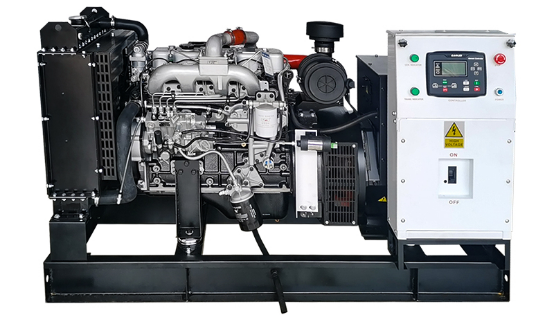
Sizing an industrial generator is more complex than sizing a residential or small commercial set. The load profile is rarely steady; it includes large motors starting across the line, variable process loads, welding bursts, and batch equipment cycles.
ISO 8528 defines standby (ESP), prime (PRP), and continuous (COP) ratings. A containerized set used as the sole power source for a remote mine must be prime or continuous rated. A set used only during grid outages at a factory can be standby rated. Prime-rated units have heavier-duty components, larger cooling systems, and longer service intervals, which is why they cost 15% to 25% more than standby units of the same nameplate. Specifying the wrong duty rating is a common and expensive mistake.
Industrial loads include motors, compressors, pumps, conveyors, crushers, and batch mixers. Each motor draws 3 to 7 times its running current during start-up. A 132kW motor on a rock crusher may need 600 to 800kVA of generator capacity just to start. When multiple large motors start sequentially, the generator must supply the running total plus the largest motor's inrush. Always request a motor-starting kVA curve from the alternator manufacturer and add a 20% margin above the calculated requirement.
One of the strongest advantages of containerized generators is parallel operation. Two or more identical containers can be synchronized to share a common bus, giving the plant N+1 redundancy and the ability to add capacity in modular steps. A remote industrial site might begin with one 1,000kVA container and add a second 12 months later as production expands. This modularity is difficult to achieve with fixed power houses but routine with containerized diesel genset modules that include built-in synchronization panels.
A containerized generator without a reliable fuel supply is an expensive decoration. Industrial users must design the fuel system with the same rigor as the electrical system.
Most containerized sets include an internal day tank sized for 6 to 12 hours of operation at rated load. For longer autonomy, manufacturers install extended base tanks inside the container frame or supply external bulk tanks with automatic transfer pumps. A 1,000kVA generator running at 75% load consumes approximately 180 liters of diesel per hour. Seventy-two hours of autonomy therefore requires 13,000 liters — enough to justify a dedicated external double-walled tank.
Industrial sites in tropical, desert, or high-altitude environments face fuel contamination risks: water condensation, microbial growth, dust, and oxidation. Every fuel system should include water separators, fine filtration, and periodic fuel polishing. For projects in Africa and Southeast Asia, Longhong pre-configures fuel systems based on lessons learned in deployments such as the Tanzania 100kVA Cummins export project, where dusty conditions and long fuel storage periods demand robust filtration.
Remote sites should negotiate fuel delivery contracts before the generator arrives. A 2,000-liter bowser truck may be the only practical resupply method during the rainy season. For critical industrial processes, maintain at least 96 hours of stored fuel and a contingency resupply plan. Some plants install two separate fuel suppliers to avoid single-source dependency.
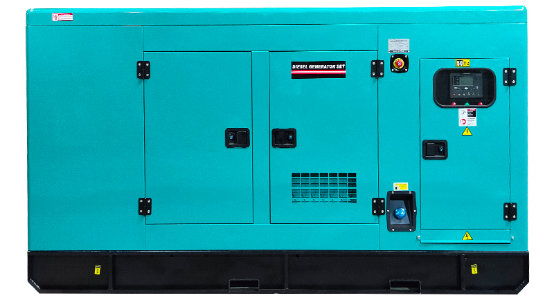
The biggest engineering challenge inside a container is heat rejection. A diesel engine converts roughly one-third of its fuel energy into useful electricity, one-third into exhaust heat, and one-third into jacket-water and aftercooler heat. All of that waste heat must leave the container quickly.
Containerized sets use either front-wall radiator discharge or top-wall discharge through a plenum. Front discharge is simpler and cheaper; top discharge is better when the container is placed against a wall or in a row of modules. The radiator fan must overcome the static pressure of the discharge duct and any louvers, so the fan and drive must be sized accordingly. Undersized cooling is the leading cause of high-temperature shutdowns in containerized installations.
Engines need large volumes of clean combustion air. A 1,000kVA set may require 1,500 cubic meters of air per minute. Container intakes must be fitted with dust filters, rain louvers, and bird screens. In dusty environments such as mining areas, cyclonic pre-filters extend air-filter life and reduce downtime. Longhong's experience with the Weichai generator operating at 5,300m altitude in a mining area demonstrates how altitude and dust combine to challenge both cooling and air filtration.
Exhaust pipes inside a container must be heavily insulated to protect personnel and nearby cables. Silencers are usually mounted outside the container shell or in a dedicated end compartment. Stack height and orientation must comply with local emissions and noise regulations. In cold climates, exhaust back-pressure must be calculated carefully because long insulated stacks can increase back-pressure and reduce engine output.
Although containerized sets are heavier than open-frame generators, they are far more mobile than fixed power houses. A 20ft container with a 1,000kVA set weighs roughly 12 to 18 metric tons, depending on fuel tank size and switchgear.
Containerized generators can be moved by standard flatbed truck, rail, or ship. At site, a mobile crane or forklift places the unit onto a prepared hardstand. The hardstand must support the concentrated load of the container corners and provide drainage to prevent water pooling under the fuel tank. A level surface within 5mm per meter is usually sufficient for engine lubrication and vibration isolation.
Because most wiring, piping, and testing are completed in the factory, on-site commissioning typically takes one to three days. The process includes fuel connection, exhaust stack installation, load-cable termination, control-panel configuration, and a load-bank test. Compare this with a fixed power house, where civil works and on-site assembly can take two to three months. For time-sensitive industrial projects, the speed advantage alone can justify the containerized format.
Containerized sets are not always the right answer. For permanent installations in urban areas where aesthetics matter, a custom-built acoustic enclosure or plant room may be preferable. For very small loads below 100kVA, a 100kW silent diesel generator or an 80kW silent diesel generator in standard canopy format is more cost-effective. The container format shines when power needs exceed roughly 500kVA, when relocation is likely, or when the project is remote.
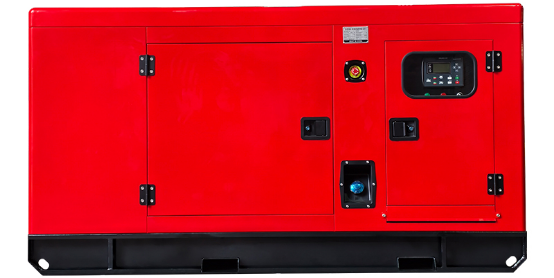
Container walls provide some noise reduction, but high-power diesel engines still produce significant sound. Industrial sites often have strict noise limits at the property line, especially when located near residential areas or wildlife zones.
Container interiors can be lined with fire-resistant acoustic foam, and air intake and discharge openings can be fitted with splitter silencers. Exhaust silencers range from residential-grade to industrial-grade; critical installations may add a secondary exhaust silencer outside the container. With proper treatment, a containerized set can achieve 75 dB(A) at 7 meters, and aggressive treatment can reach 65 dB(A) or lower.
Industrial generators are increasingly subject to emissions regulations. Depending on the destination market, engines may need EPA Tier 4 Final, EU Stage V, or equivalent local certification. After-treatment systems include diesel oxidation catalysts (DOC), diesel particulate filters (DPF), and selective catalytic reduction (SCR). These systems add cost, complexity, and maintenance, but they are non-negotiable in regulated markets. A qualified China diesel generator supplier will offer certified engine variants and guide you through the documentation.
Fuel tanks must be double-walled or fitted with bunding sized to 110% of tank capacity. Drip trays under daily maintenance areas catch oil and coolant during servicing. These features protect both the environment and the operator from regulatory fines. Longhong's qualifications and certifications include CE and ISO standards that form the baseline for environmentally responsible generator manufacturing.
Sourcing a containerized industrial emergency diesel generator from China can reduce capital cost by 30% to 50% compared with European or North American brands, but the supplier must be evaluated carefully. Industrial projects cannot afford a generator that fails during commissioning.
Containerized generators require more than engine assembly. The supplier must design ventilation, acoustics, fuel systems, and switchgear integration inside a confined steel box. Ask for drawings, heat-rejection calculations, and photos of previous containerized builds. A supplier that only produces open-frame sets may struggle with the thermal and acoustic engineering required for containerized units.
The engine and alternator typically represent 60% to 70% of the generator's value. Insist on traceable serial numbers, factory warranty cards, and copper-wound alternators. Engine options from Cummins, Weichai, Yuchai, Perkins, Volvo, and Yunnei each suit different applications: Cummins and Perkins for global service networks, Weichai and Yuchai for value and Asian/African support, Volvo for premium fuel efficiency, and Yunnei for compact three-phase diesel generator modules.
Every containerized set should leave the factory with a documented load test at 0%, 25%, 50%, 75%, 100%, and 110% of rated power, plus a thermal imaging survey of electrical terminations. For critical industrial projects, request a witness test where your engineer or a third-party inspector verifies performance before shipment. Documentation should include single-line diagrams, layout drawings, operation manuals, spares lists, and certification files.
Industrial generators are only as reliable as the support behind them. Confirm that the supplier provides commissioning engineers, operator training, a recommended spares kit, and remote diagnostic support. For overseas projects, a supplier with experience in your region will understand local voltage standards, environmental conditions, and fuel quality. Longhong exports containerized and export diesel generators to Cambodia, Vietnam, Myanmar, Tanzania, Libya, and many other markets, pre-configuring each unit for destination conditions.
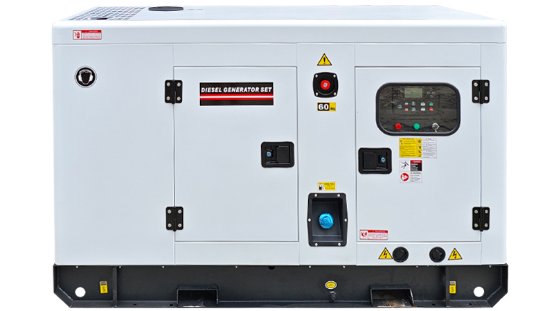
A containerized diesel power plant offers industrial users a rare combination of high power output, rapid deployment, and long-term flexibility. Whether you are powering a remote mine, a mobile asphalt plant, a disaster-relief base, or a manufacturing facility with an unreliable grid, the container format turns months of civil construction into days of site connection. Success depends on sizing for real industrial loads, designing fuel and cooling systems for the local environment, and choosing a qualified diesel generator manufacturer with proven containerized experience.
By verifying certifications, demanding factory load testing, and planning for fuel logistics and emissions compliance, you transform a shipping container into a reliable power station that can move with your business. For a complete range of containerized, canopy, and trailer diesel generator sets from 3kVA to 3000kVA, explore the Longhong product catalog or request a tailored proposal for your industrial power project.


