

 English
 العربية
 Español
 Русский
Industry News
Industry News

Two buyers can receive quotations for the same engine in the same enclosure and see two different numbers on the nameplate — say 110 kVA on one and 100 kVA on the other. Nothing is wrong with either machine. The difference is the duty rating: the load pattern and number of hours per year the diesel generator set is engineered to deliver that power. This is the single most misunderstood line item in generator procurement, and getting it wrong costs money in both directions — pay for capacity you never use, or burn out a machine that was asked to do a job it was never rated for. This guide explains the three duty classes — standby, prime and continuous — in plain buying language, shows how the ISO 8528 rules behind them work, and explains how a professional factory quotes the rating your application actually needs. Guangdong Longhong Electromechanical Equipment Co., Ltd., a China diesel generator manufacturer established in 2010 with more than 20 years of industry experience, builds diesel power generator sets from 3 kVA to 3,000 kVA in every duty class, with CE and ISO certification and 200+ units in permanent stock.
A diesel engine does not have one fixed horsepower — it has a sustainable output that depends on how long and how hard you ask it to work. Duty ratings put engineering language around that reality, so that a buyer, a consultant and a factory can all mean the same thing when they write a number on paper.
The international reference is the ISO 8528 standard, which defines the ratings most reputable diesel genset builders use worldwide. The same genset will carry three related figures: a standby rating (the highest), a prime rating (typically about 10% lower), and a continuous rating (often roughly 70–80% of the standby figure). A set marketed as a 100 kVA prime machine may therefore be quoted as a 110 kVA standby unit by another supplier — the iron is identical, only the contract of use differs. When you compare offers, always check which rating the quoted kVA refers to; comparing a standby quote against a prime quote is the most common way buyers believe they have found a bargain that does not exist.
The standby diesel generator rating covers emergency use: the set waits for the grid to fail, starts, carries the building for the duration of the outage, and goes back to rest. It is rated for a limited number of running hours per year and cannot be deliberately overloaded. The prime power rating covers sets that run as the everyday source of electricity, with loads that rise and fall through the day — construction sites, farms, workshops and whole communities with no reliable grid. The continuous rating covers the most demanding contract of all: a constant, unchanging load, around the clock, for an unlimited number of hours. Each class has load-factor rules attached, and those rules — not marketing — determine how long the engine lasts.
For most buildings — hospitals, hotels, schools, data rooms, shopping malls, factories — the correct rating is standby. The economics are attractive precisely because the machine spends most of its life doing nothing but being ready.
A standby rating suits any site where the utility supply is normal and outages are the exception: an emergency diesel generator behind an automatic transfer switch, a power outage backup power generator for a retail center, or an industrial emergency diesel generator protecting a production line. Typical accumulated use is modest — from a handful of hours a year in stable grids to a few hundred hours in regions with frequent interruptions. Manufacturers generally cap standby use at a few hundred hours per year (the stated limit varies, commonly in the 200–500 hour range, so confirm it in writing), and allow no overload beyond the nameplate. In exchange for those limits, the buyer gets the highest output figure the engine frame can deliver.
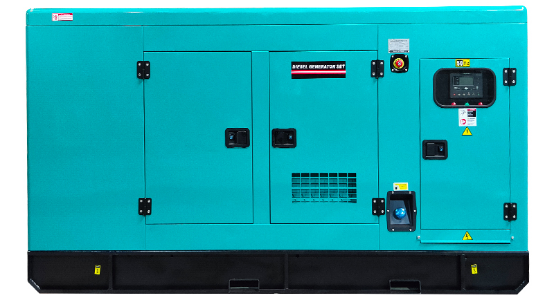
Two rules keep a standby set honest. First, the average output over any 24-hour running period is normally held at or below 70% of the standby nameplate — short bursts at full load are fine, but the set is not a substitute for a utility connection. Second, standby running time accumulates: if your grid degrades and outages start eating 600 hours a year, your duty class has quietly changed, and the machine should be re-rated or replaced. Buyers who expect long daily outages — island communities, mining camps, telecom sites — should price the job as prime power from the start rather than discover the difference in failed warranty claims. Longhong's 100kW diesel generator and 80kW silent diesel generator are both frequently specified in standby service for exactly this class of building load, and the same frames are available in prime-rated versions for harder-working sites.
Prime power is the workhorse rating of the export world. Wherever the grid is absent, weak or unaffordable, the generator is not a backup — it is the power station.
Under ISO 8528, a prime-rated set may run an unlimited number of hours per year at a variable load, provided the average output over any 24-hour period stays at or below 70% of the prime rating. That rule mirrors how real sites behave: a quarry crusher draws hard for two hours, idles through lunch, and runs conveyors all afternoon. The rating also carries a genuine overload allowance — up to 10% above the prime nameplate for one hour in every twelve — which absorbs short surges like motor starting without forcing the buyer to oversize the whole machine. This combination of unlimited hours, realistic averaging and a small overload cushion is what makes prime rating the correct language for construction site diesel generator set contracts, farm power, rental fleets and off-grid communities.
Ask one question: will the set run more than it rests? If daily operation is the plan — a construction camp, an irrigation scheme, a workshop in a district with daily load-shedding, a diesel power plant serving a remote settlement — specify prime. Our export history makes the pattern clear: the 750KVA Cummins unit delivered to Libya and the 100KVA Cummins set shipped to Tanzania both serve buyers for whom grid electricity is unreliable or absent, and both were specified with daily running in mind. On the physical side, prime sets that work outdoors usually wear either an open frame for easy service access or a weatherproof canopy diesel generator enclosure; rental companies and projects that relocate frequently step up to skid-mounted or mobile trailer diesel generator formats so the same asset serves contract after contract.
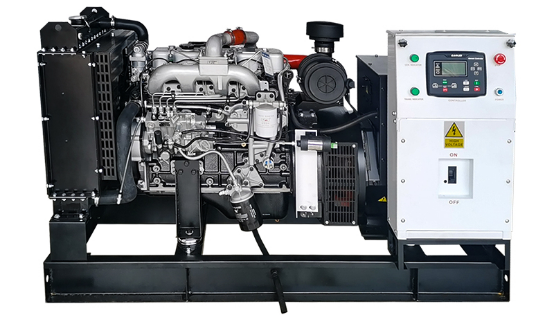
Continuous (ISO term COP) is the least quoted and most specialized rating. It describes a set running at an essentially constant load — not varying with the day — for an unlimited number of hours, with no overload allowance at all.
Continuous rating fits base-load generation: island micro-grids, process plants that must never stop, mine sites with steady pumping loads, and parallel installations that together behave like a utility. Because the load is flat, the averaging rules of prime rating are irrelevant — the engine simply holds its continuous output forever. Note the arithmetic trap: a 100 kVA continuous set carries less than a 100 kVA prime set at the same averaging, so continuous quotes must be compared against continuous quotes. Larger projects frequently reach this class with multiple synchronized units; Longhong's 400KW/500KVA Yuchai silent generator installations show how single large frames serve heavy industrial load, while containerized sets in parallel build genuine diesel power plant capacity. If your consultant's spec sheet says "base load" anywhere, raise the continuous rating with your supplier before price comparisons begin.
The table below condenses the three classes into the terms a buyer can put directly into an enquiry. Use it to sanity-check any quotation you receive — a factory that states the rating, the load rule and the annual hours unprompted is a factory that understands its own product.
| Rating class | Load pattern | Average output rule | Annual hours | Overload allowed | Typical buyer |
|---|---|---|---|---|---|
| Standby (LTP) | Emergency only, during grid outages | Up to 70% of nameplate over 24 h running | Limited — commonly 200–500 h/yr (check maker's limit) | None | Hotels, hospitals, schools, malls, factories |
| Prime (PRP) | Variable load, daily running | Up to 70% of prime rating over any 24 h | Unlimited | 10% for 1 h in 12 h | Construction, farms, rental, off-grid villages, weak grids |
| Continuous (COP) | Constant load, non-stop | 100% of continuous rating sustained | Unlimited | None | Base-load micro-grids, process plants, mines |
The most expensive duty-rating mistake is not buying too small — it is buying too large and then running the machine almost empty. Undersized load destroys diesel engines slowly, politely, and outside most buyers' mental model of maintenance.
A diesel engine needs heat and load to burn fuel completely. Run a large set at 15–25% of its rating for months — the classic outcome of "we sized for the future" — and cylinder temperatures stay too low for full combustion. Unburned fuel and soot blow past the rings into the oil, carbon builds in the exhaust and turbocharger, cylinder walls glaze, and the engine begins "wet stacking": wet, oily, sooty residue at the exhaust manifold. The symptoms look like a maintenance problem, but the root cause is a duty-rating and sizing problem. A standby set at a hotel that only ever carries the lobby lighting is a prime candidate; so is a 500 kVA unit protecting a workshop that actually draws 80 kW.
The cure is unglamorous: measure the real load, then buy the smallest rating that carries it with motor-starting margin and 20–25% growth headroom. Aim for an operating window of roughly 50–80% of nameplate, where diesel engines are happiest and most efficient. Monthly load-bank testing at rated output burns out the carbon an under-loaded set accumulates and keeps the alternator honest. Where loads genuinely vary — a containerized diesel generator serving a processing line by day and a camp by night — split the duty across two smaller sets and stage them through an automatic controller, so each machine spends its running life inside the healthy band. Buyers comparing the 32kW silent generator against larger frames for a small facility are making exactly this calculation: two modest sets staged correctly will outlive one oversized giant that idles wet every week.
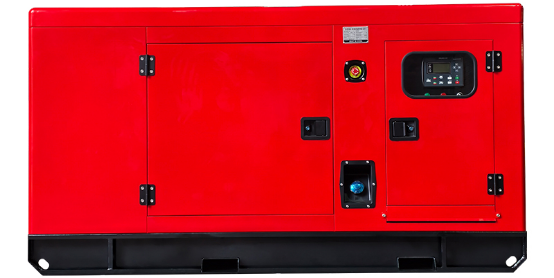
China remains the world's most competitive source for generator sets in every duty class, but the buyer carries the job of specifying correctly. The good news: the specification work fits on half a page.
A competent factory can quote to the kVA in one reply if your enquiry states five things: the total running load in kW, the largest motor and how it starts, the expected running hours per day and per year, the site altitude and ambient temperature (both derate output — every 100 m above sea level and every 10°C above reference conditions shave capacity), and the electrical format — most industrial buyers need a three-phase diesel generator at 380/400V 50Hz, while 60Hz markets and home-scale sites differ. Whether the enquiry arrives in English, Spanish ("generator electrico") or another language, those five facts translate directly. State the duty class you believe you need and let the factory confirm it against its rating tables; then ask for the test report showing the set's output at prime, not just standby.
Before ordering, ask the supplier three questions. First: "Which ISO 8528 rating is this kVA figure, and what is the same set's output in the other two classes?" — a real manufacturer answers instantly. Second: "What annual hour limit and load-factor rule apply to this rating, in writing?" Third: "Which engine brand and alternator brand are inside, and will the factory acceptance test show both?" Genuine source factories using Cummins, Weichai, Yuchai, Perkins, Volvo or Yunnei engines welcome these questions and answer them with documents — CE and ISO certificates included. Longhong has operated on that basis since it was established in 2010, building on more than 20 years of team experience; a buyer whose needs are smaller — a generator for home backup or a compact retail shop — can start equally confidently with the 10–14kW silent generator class, where the same rating discipline applies at modest scale. The full range is browsable in the diesel generator product catalog, from open-frame prime workhorses to silent, trailer and containerized formats.
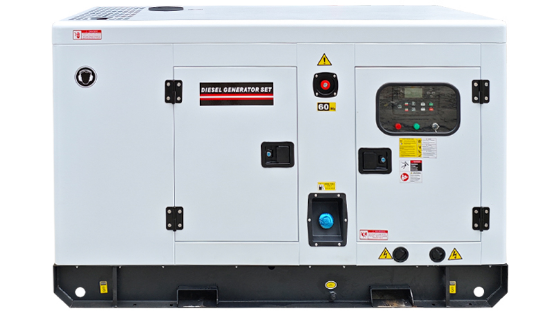
Duty ratings are not fine print — they are the contract between your load profile and the engine's life. Standby rating buys maximum output for machines that mostly wait; prime rating buys unlimited hours for sets that work every day; continuous rating buys relentless base-load service for installations that never stop. Quote, compare and purchase in the same rating language as your actual use, size into the 50–80% load band, and demand the ISO 8528 figures in writing from every supplier. Buyers who follow that sequence get generator sets that run for decades; buyers who skip it subsidize the lesson with fuel, carbon-cleaning and premature overhauls. When you are ready to specify, Guangdong Longhong Electromechanical Equipment Co., Ltd. will confirm your duty class, quote all three ratings for the same frame, and back the numbers with factory test reports.


