

 English
 العربية
 Español
 Русский
Industry News
Industry News

When buyers evaluate a diesel generator set, most of the attention goes to the engine — the Cummins, Weichai, Perkins or Yuchai badge on the block. Yet in a modern diesel genset, the alternator does just as much work as the engine. It is the component that converts mechanical rotation into electrical power, and it is the single biggest factor in whether your voltage stays stable for sensitive equipment, whether motors start cleanly, and whether the set survives ten years of standby duty or fails at hour three of its first real blackout.
As a China diesel generator manufacturer building sets from 3KVA to 3000KVA since 2010, we see alternator-related problems in imported generators far more often than engine problems — because the alternator is where cost-cutting is least visible. This guide explains what an alternator actually does, which construction details matter, how the AVR controls power quality, and how to inspect alternator quality before you pay for a standby diesel generator from any supplier, including us.
An engine that never runs will still start on the first crank after months of idleness; an alternator that is poorly built degrades differently. Its insulation ages, its bearings dry out, its voltage regulation drifts — and none of this is visible from the outside of a closed canopy. That is precisely why the alternator is the component most often compromised on low-cost export units.
The alternator (also called the generator end or dynamo) contains a rotating field and a stationary stator. The diesel engine spins the rotor inside the stator windings, inducing alternating current. The frequency of that current is locked to engine speed — 1500 RPM for 50Hz output, 1800 RPM for 60Hz on a 4-pole machine. The voltage is regulated electronically by the Automatic Voltage Regulator (AVR).
Three performance attributes of your entire diesel power generator are decided by the alternator, not the engine:
A genset with a world-class engine and a second-rate alternator will deliver second-rate power. There is no way around that.
Almost every modern industrial diesel generator set — including all of the units in our product catalog — uses a brushless synchronous alternator. Understanding its construction helps you ask better questions before ordering.
In a brushless design, the main rotor's field current is supplied by a small auxiliary generator (exciter) mounted on the same shaft, with rectifier diodes converting the exciter output to DC. Because no brushes or slip rings contact the main circuit, maintenance is minimal and reliability is high — there are no wearing contacts in the power path. If a supplier offers a set with slip-ring brushes on a modern standby unit, treat it as a red flag unless it is a very specific legacy application.
Genset-package alternators are almost always single-bearing: the alternator's front flange bolts directly to the engine flywheel housing and the rotor couples to the flywheel via a flexible disc. This is correct and industry-standard. What matters is the quality of that coupling — a cheap flexible disc or misaligned bell housing produces vibration that destroys both engine and alternator bearings over time. On a factory visit or video inspection, ask to see the bell-housing alignment during assembly.
Two letter codes tell you a lot about alternator durability:
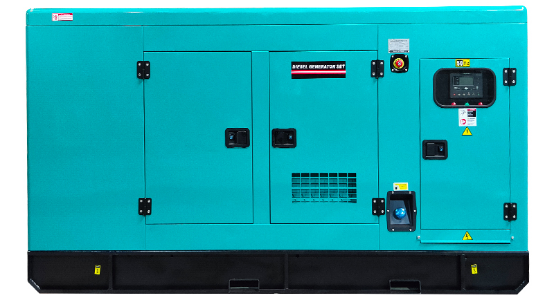
A 100kW silent diesel generator: the canopy must protect the alternator without starving it of cooling airflow — enclosure design and alternator IP rating must be engineered together. View specifications →
This is the section every buyer should read twice, because it is where the most aggressive cost-cutting happens in the export market.
Genuine alternator stators are wound with 100% electrolytic copper wire. Low-cost copies substitute copper-clad aluminum (CCA) or copper-plated aluminum — visually similar, materially different. Aluminum has roughly 60% of copper's conductivity, so a CCA winding must run hotter to deliver the same current, or the nameplate rating is simply dishonest. The consequences appear over months: insulation breakdown, inter-turn short circuits, and an alternator that cannot hold voltage under load.
Aluminum weighs about one-third of copper. This gives you a simple verification method that works even before shipment: weigh the alternator, or the complete set, against the specification sheet of a known-genuine unit. A 100kW set whose generator end weighs suspiciously little is telling you something. Reputable China diesel generator suppliers expect this question — we welcome it, because weight comparison is an easy test for buyers to perform at factory acceptance.
Stator windings come in different coil pitches. A 2/3 pitch winding produces a cleaner sine wave with lower third-harmonic content, which matters enormously when your load includes UPS systems, variable frequency drives (VFDs), LED lighting banks or IT equipment — all of which generate harmonic currents. A genset feeding a hospital's medical imaging suite or a data room should specify 2/3 pitch. For simple resistive and motor loads (water pumps, heaters, compressors with soft starters), a 2/3-pitch machine is still the safer default; the price difference between pitch grades is small relative to the cost of nuisance trips.
Every unit we build — from the compact 32kW silent generator used on farms and in small commercial buildings up to containerized industrial sets — is wound for the harmonic reality of modern electrical loads, and we confirm the winding specification in writing on every quotation.
The Automatic Voltage Regulator is a circuit board roughly the size of a smartphone, usually mounted at the rear of the alternator or in the control cabinet. Despite its size, it decides the voltage behavior of the entire power generator.
A quality AVR samples the output voltage hundreds of times per second and adjusts rotor excitation to hold regulation within ±1% (good) to ±0.5% (excellent) from no-load to full-load. It also manages transient response: when a large motor starts, voltage dips — a quality AVR recovers within 1–2 seconds; a poor one may sag 15–20% for several seconds or destabilize entirely.
Beyond basic regulation, better AVRs provide:
Across our service history — including export projects such as the Tanzania 100KVA Cummins installation and hundreds of domestic standby installations — voltage regulation faults are overwhelmingly AVR-related, not winding-related. A spare AVR costs a small fraction of a winding repair, which is why we recommend every export customer add one spare AVR to their order. It is the cheapest insurance in the genset industry.
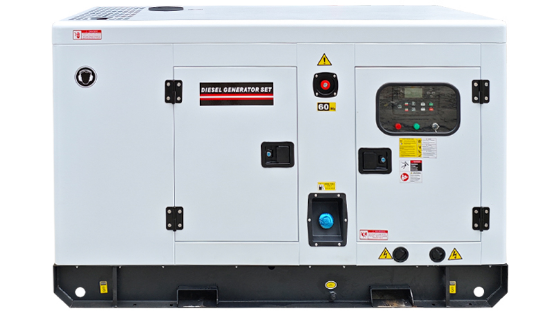
Compact sets like this 32kW silent genset use the same brushless alternator and AVR architecture as larger industrial machines — the quality difference is in materials and regulation precision, not architecture. View specifications →
Not all loads stress an alternator the same way. Before selecting a set, classify what you are actually powering.
For mixed commercial loads — the typical hotel, supermarket or workshop scenario — we advise sizing the alternator so that normal running sits at 50–80% of rated capacity. This keeps you inside the machine's efficient band, leaves transient headroom for motor starts, and avoids the wet-stacking problems of chronic under-loading that plague oversized engines. If you are unsure which bracket your facility falls into, our engineering team at Guangdong Longhong Electromechanical Equipment performs load-profile sizing free of charge before every quotation — send us your equipment list and we will calculate it with you.
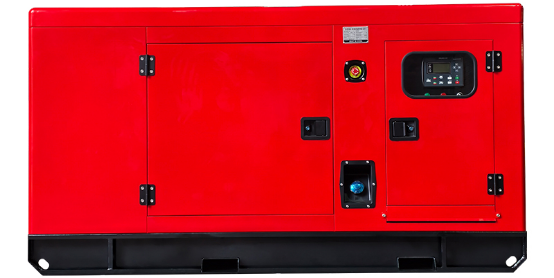
An 80kW silent diesel generator — the workhorse size for hotels, workshops and cold rooms with mixed motor and electronic loads. Correct alternator selection here prevents nuisance trips for years. View specifications →
China produces both world-class alternators and disposable ones, often in the same city. The difference is not nationality — it is specification discipline. Use this checklist whether you buy from us or from anyone else:
None of these checks require a factory visit — they require a supplier who answers questions in writing. Suppliers who resist written specifications are telling you what their product is.
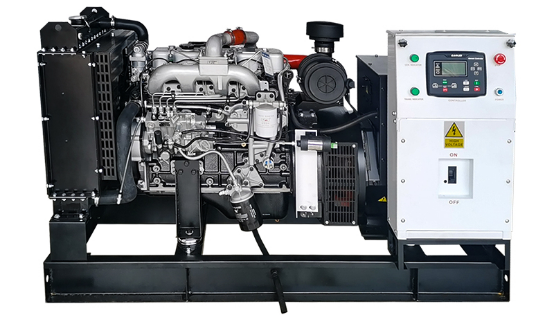
An open frame set shows the alternator clearly: terminal box, AVR housing and cooling fan are all inspectable. Factory acceptance is the best moment to verify winding material and build quality. Browse the full range →
The engine badge tells you maybe half the story of a diesel generator set. The alternator decides whether that power is actually usable — stable enough for electronics, strong enough for motors, and durable enough for a decade of standby readiness. In 2026's export market, the most valuable skill a buyer can develop is asking alternator questions before money changes hands: winding material, pitch, insulation class, AVR specification and per-unit test reports.
At Longhong Power, we build every set — from 3KVA portable units to 3000KVA containerized power plants — with 100% copper windings, Class H insulation and name-brand AVRs as standard, and we document it on every quotation and test report. With more than 20 years of engineering experience, 200+ units in permanent stock, and exports across Cambodia, Vietnam, Myanmar, Tanzania, Libya and beyond, we are ready to spec the right alternator for your load. Contact us through the product catalog with your equipment list, and our engineers will return a sized, documented proposal.
About Guangdong Longhong Electromechanical Equipment Co., Ltd.
Founded in 2010 in Guangdong, China, Longhong Power is a professional diesel generator manufacturer with 20+ years of industry experience. Our product line spans 3KVA–3000KVA open frame, silent/canopy, trailer and containerized diesel generator sets, powered by Cummins, Weichai, Yuchai, Perkins, Volvo and Yunnei engines. All products are CE and ISO certified, with 200+ units in permanent stock and exports to Cambodia, Vietnam, Myanmar, Tanzania, Libya and other markets. Visit https://www.longhongpower.com/ to request a quotation.


