

 English
 العربية
 Español
 Русский
Industry News
Industry News

A five-star hotel guest never thinks about the generator in the basement — until the lights flicker, the elevators stop, and the air conditioning goes silent. In that moment, the difference between a minor inconvenience and a crisis is a standby diesel generator that starts automatically within seconds. The same is true — but with far higher stakes — in a hospital, where a power outage can mean ventilators losing pressure, operating rooms going dark, and vaccine cold-chain storage warming past safe limits. For facility managers, procurement officers, and hospitality groups planning new properties, selecting the right emergency diesel generator is not a box-ticking exercise; it is a decision that affects guest satisfaction, regulatory compliance, and in clinical settings, human life. Longhong Power has supplied silent canopy generators, auto-start systems, and containerized power solutions to hotels, shopping malls, and healthcare facilities across Southeast Asia and Africa. As a China diesel generator manufacturer with more than 20 years of experience and a permanent stock of 200+ units, the company understands the unique demands of hospitality and medical backup power. This guide walks buyers through the entire decision process — from load calculation and noise control to fuel storage, ATS integration, and factory evaluation — so that when the grid fails, your facility keeps running.
Grid reliability varies enormously depending on location. In major cities across Southeast Asia and Africa — regions where many new hotels and hospitals are being built — utility power interruptions of two to eight hours are common, and rolling outages during peak demand seasons are the norm rather than the exception. Even in regions with relatively stable grids, severe weather, equipment failure at substations, and planned maintenance outages create gaps that no hospitality or medical facility can afford to ignore.
For hotels, a power outage translates directly into revenue loss and reputation damage. An international business traveler whose presentation laptop dies, a wedding reception plunged into darkness, or a refrigeration unit spoiling thousands of dollars of food — each incident erodes guest confidence and triggers negative reviews that persist for years. A shopping mall backup diesel genset serves a similar function for retail complexes: escalators stop, POS systems fail, and security cameras go offline. A properly sized diesel generator set keeps HVAC running, lighting stable, and critical refrigeration operational until grid power returns. Hotel operators increasingly view backup power not as a cost but as a core amenity — some luxury brands now market their "100 percent power guarantee" as a booking differentiator.
Hospitals face even stricter requirements. Regulatory codes in most countries mandate that critical-care facilities maintain on-site backup power capable of sustaining life-support equipment, surgical lighting, sterilization systems, and emergency communications for a minimum of 96 hours. An industrial emergency diesel generator rated for continuous duty is the standard solution. The consequences of inadequate backup power are not measured in negative reviews but in patient safety incidents. During the 2020–2022 period, several widely reported hospital outages in developing nations resulted in ICU evacuations and vaccine spoilage — events that prompted health ministries to tighten generator-sizing and testing requirements. For hospital facility directors, the question is never "do we need a generator?" but rather "is our existing generator adequate, reliable, and properly maintained?"
In both sectors, the power outage backup power generator is the last line of defense. It must start when called upon — every time, without exception. That reliability standard is why diesel, rather than natural gas or solar-plus-battery, remains the dominant choice for critical standby applications: diesel fuel is storable on-site for months, diesel engines have proven start reliability exceeding 99 percent when maintained, and a diesel genset delivers high kilowatt density in a compact footprint. You can explore Longhong Power's company background to learn how the firm has served clients across Cambodia, Vietnam, Tanzania, and Libya — markets where grid reliability challenges make standby generation essential.
The single most common mistake in specifying a standby diesel generator is under-sizing. A generator that cannot carry the facility's essential load during an outage is worse than no generator at all, because it creates a false sense of security. The second most common mistake is massive over-sizing — buying a 1000 kVA genset when 400 kVA would suffice — which leads to wet-stacking, carbon buildup, premature engine wear, and wasted capital.
Start by separating your facility's electrical loads into two categories. Essential loads are those that must remain powered during an outage: in a hospital, this includes ICU ventilators, operating-room lighting, medical refrigeration, fire-safety systems, emergency lighting, and communication infrastructure. In a hotel, essential loads typically include emergency lighting and exit signage, fire-pump and alarm systems, at least one elevator, front-desk and reservation IT, kitchen refrigeration, and minimum HVAC for guest comfort and safety. Non-essential loads — decorative lighting, swimming-pool pumps, non-critical HVAC zones — can be shed during an outage to reduce generator capacity requirements.
Simply adding up the nameplate wattage of every essential device overstates the actual demand, because not all equipment runs simultaneously at full load. Apply a demand factor (typically 0.8–0.9 for hospitals, 0.6–0.7 for hotels) to account for equipment that cycles on and off. Then apply a diversity factor (typically 1.2–1.4) to account for the statistical probability that not all loads peak at the same instant. The result is your facility's estimated standby demand in kilowatts.
Motor starting is the hidden sizing trap. When a large induction motor — say, a 75 kW HVAC compressor or a fire pump — starts, it draws six to eight times its running current for the first few seconds. The diesel power generator must have enough transient overload capacity to handle these inrush currents without the voltage dipping more than 15 percent (which can trip sensitive medical electronics). A common rule of thumb: for every large motor load, add its locked-rotor starting kVA to your sizing calculation. A generator with a permanent-magnet or auxiliary-winding excitation system — standard on Longhong's 100kW diesel generator — handles motor starting far better than a basic self-excited alternator.
Once you have your calculated standby demand, add a 20–25 percent margin for future load growth and to keep the generator operating in its optimal efficiency band (typically 50–80 percent of rated load). A genset that runs at 30 percent load for years will suffer carbon buildup; one that runs at 95 percent has no headroom for the day a new MRI machine or additional guest-room wing comes online.
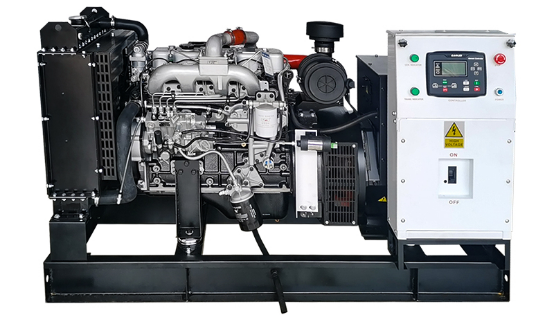
A diesel generator running at full load produces engine exhaust noise, mechanical vibration, cooling-fan roar, and alternator whine that can easily exceed 90 dB(A) at one meter — louder than a lawnmower, sustained for hours. For a hospital located in a residential neighborhood or a hotel whose guest-room windows face the generator room, this noise is unacceptable. Many municipal codes limit continuous noise at the property line to 55–60 dB(A) during daytime and 45–50 dB(A) at night. A standard open-frame diesel genset will violate these limits by a wide margin.
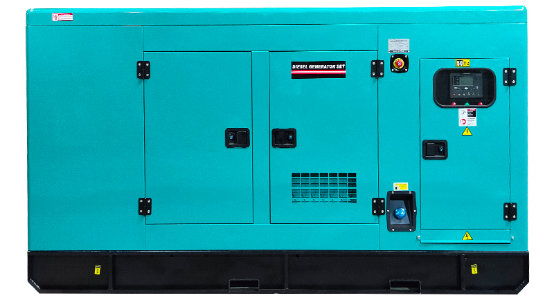
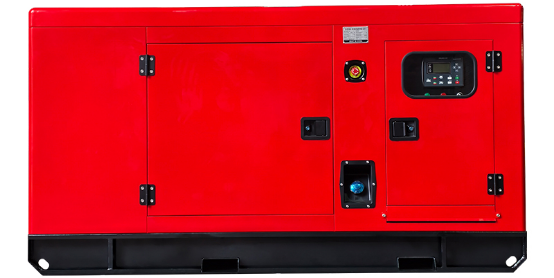
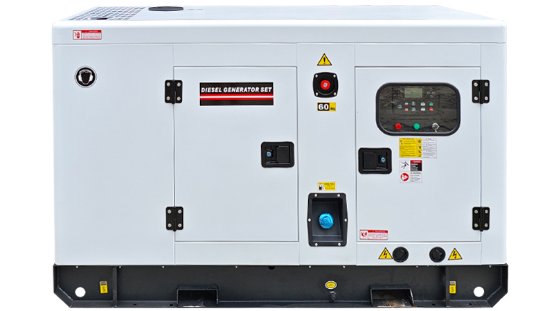
The solution is a canopy diesel generator — an enclosure engineered with sound-absorbing foam, heavy-duty steel panels, residential-grade mufflers, and anti-vibration mounts that reduce radiated noise to 65–75 dB(A) at 7 meters for mid-range units, and as low as 60 dB(A) at 7 meters for super-silent models. For hotels and hospitals in noise-sensitive environments, a silent canopy generator is not a luxury upgrade; it is a permit-to-operate requirement.
Longhong Power manufactures a range of silent canopy generators suitable for hospitality and healthcare installations. The 80kW silent diesel generator is an excellent fit for a boutique hotel or small clinic, while the 32kW silent generator serves as a compact backup for individual building wings or satellite clinics where space is tight. For larger facilities needing robust three-phase standby power, the silent version of the 100kW unit provides a proven, quiet solution.
A silent canopy addresses airborne noise, but structure-borne vibration travels through concrete floors and walls. In a hospital, vibration from a poorly mounted generator can be felt in patient rooms two floors above the mechanical room. Specifying spring-isolation mounts, flexible exhaust connectors, and a properly sized inertia base (a concrete pad that adds mass and dampens vibration) is essential. The exhaust system should include at least two stages of silencing — a residential muffler and a critical-grade muffler — and the exhaust outlet should be positioned away from fresh-air intakes and openable windows.
In a hospital, the window between utility power failure and generator power availability is not measured in minutes — it is measured in seconds. Critical-care life-support equipment typically has an internal battery providing 30–90 seconds of ride-through. If the auto-start diesel generator has not assumed the load within that window, ventilators shut down, anesthesia machines lose power mid-surgery, and electronic medical records go offline. Healthcare codes in most jurisdictions require that on-site generators achieve rated voltage and frequency within 10 seconds of utility failure — a standard known as Type 10 or NFPA 110 Level 1.
Achieving that 10-second start requires three components working in concert:
The ATS monitors utility voltage on all phases. When it detects a sustained undervoltage, phase loss, or frequency deviation beyond preset thresholds, it sends a start signal to the generator controller. Once the generator reaches stable voltage and frequency (typically within 5–8 seconds), the ATS mechanically transfers the load from utility to generator. When utility power is restored and stable for a programmable period (usually 3–10 minutes to avoid nuisance transfers on momentary flickers), the ATS transfers back and initiates a generator cooldown cycle.
A cold diesel engine takes longer to start and reach operating temperature than a warm one. Hospital-grade standby generators are typically equipped with jacket-water heaters (electric elements that keep coolant at 32–40°C) and, on larger units, continuous pre-lubrication pumps that circulate oil to bearings before start. These features add cost but shave critical seconds off start time and dramatically reduce engine wear on repeated starts.
A modern three-phase diesel generator controller does far more than start and stop the engine. It monitors battery voltage, fuel level, coolant temperature, oil pressure, and alternator output in real time. It logs every start event, every fault, and every test run. In hotels and hospitals with facility-management teams that may not include a dedicated generator technician, a controller with remote monitoring — SMS or ethernet alerts — is essential for maintaining readiness. Longhong's 64kW automatic generator comes equipped with an integrated ATS-ready controller, making it a turnkey solution for medium-sized facilities.
A generator without fuel is an expensive sculpture. The first question a hotel or hospital facility director must answer is: how many hours of autonomous operation do we need? The answer depends on local grid reliability and fuel-delivery logistics. In regions where fuel suppliers can deliver within 24 hours, a 24-hour on-site supply may suffice. In remote areas or during natural disasters when roads are impassable, 72 to 96 hours of fuel is the minimum prudent reserve.
Diesel consumption for a standby genset is approximately 0.25–0.30 liters per kWh of generated energy at full load. A 500 kVA generator running at 80 percent load consumes roughly 100 liters per hour. For 72 hours of autonomy, that means 7,200 liters of on-site storage — typically a double-walled steel tank with spill containment and leak monitoring. Many China diesel generator factory orders include an integral base-tank (a fuel tank built into the genset skid, typically 8–24 hours of capacity) plus a separate bulk-storage tank plumbed to the generator with automatic transfer pumping.
Diesel engine emissions — particularly NOx and particulate matter — are regulated in most urban environments. A diesel power plant operating as a standby source typically qualifies for emergency-use exemptions under most emissions regimes, but these exemptions come with conditions: annual operating hours are capped (commonly 50–100 hours for testing and maintenance), and the generator must not be used for peak-shaving or economic dispatch without additional permitting. Buyers in the EU, UK, and certain African nations with European-influenced regulatory frameworks should verify that the engine meets at least EU Stage IIIA or U.S. Tier 3 equivalent standards. Longhong's products, using engines from CE and ISO certified manufacturing lines with brands including Cummins, Perkins, Volvo, Weichai, Yuchai, and Yunnei, meet or exceed these thresholds.
A generator room in a hotel or hospital is, by definition, a room containing a combustion engine and hundreds of liters of diesel fuel. Fire-code compliance is non-negotiable. The room must have two-hour fire-rated construction, a fire-suppression system (typically CO2 or clean-agent for hospitals, foam or sprinkler for fuel storage areas), explosion-proof ventilation, leak-detection sensors for fuel lines, and proper clearances around the genset for maintenance access. The exhaust routing must terminate at least 3 meters above the nearest roof and away from HVAC intakes.
To make the sizing process concrete, here are four representative scenarios drawn from typical Longhong Power client projects. These are illustrative; actual sizing must be based on a site-specific load audit performed by a qualified electrical engineer.
Essential load: emergency lighting, fire systems, one elevator, front-desk IT, kitchen refrigeration, and basic HVAC for common areas and a subset of guest rooms. Estimated standby demand: 60–80 kW. Recommended solution: a single silent diesel generator of 80–100 kW, such as the 100kW diesel generator from Longhong's silent canopy line, with a 24-hour base tank and an ATS controller configured for 10-second start.
Essential load: vaccine refrigeration, basic lab equipment, lighting, communication, and limited HVAC. Estimated standby demand: 20–32 kW. Recommended solution: the 32kW silent generator or the 20kW silent diesel generator, both available in silent canopy configuration suitable for clinic installation with minimal noise impact on patient areas.
Essential load: ICU ventilators, surgical suites, imaging equipment (CT, X-ray), medical refrigeration and pharmacy cold storage, central HVAC for critical zones, fire systems, communications, and emergency lighting. Estimated standby demand: 300–500 kW. Recommended solution: a containerized diesel generator or a large silent canopy unit rated 400–500 kW with a 72-hour bulk fuel tank. Longhong's experience with large-scale export projects — including the Libya 750KVA Cummins export and the 500KVA silent generator for a school campus — demonstrates the company's capability in these larger, code-sensitive installations.
Essential load: emergency lighting, escalator return-to-ground-floor function, fire and smoke control, security and CCTV, refrigeration for food-court tenants, and minimum HVAC for safe evacuation. Estimated standby demand: 200–400 kW depending on mall size. A shopping mall backup diesel genset typically uses a silent canopy configuration installed on the roof or in a dedicated mechanical penthouse, with exhaust routed above the building line. For reference, the 400KW/500KVA Yuchai silent generator case study shows a real-world installation of this scale.
For international buyers — particularly hotel groups and hospital procurement teams sourcing from China — selecting a China diesel generator supplier is a decision with long-term consequences. A genset is not a commodity; it is a 15-to-20-year capital asset whose reliability depends on the quality of its engine, alternator, control system, canopy fabrication, and after-sales support. Here is what to verify before placing an order:
Insist on genuine engines from recognized manufacturers: Cummins, Perkins, Volvo, or for domestic Chinese projects, Weichai, Yuchai, and Yunnei. Beware of factories that offer "Cummins-equivalent" or "Perkins-licensed" engines at suspiciously low prices — these are often cloned or reconditioned units that fail prematurely. Longhong's product catalog lists genuine engines from all six major brands, covering 3KVA to 3000KVA.
The alternator (Stamford, Marathon, or Mecc Alte) and the controller (DeepSea, ComAp, or SmartGen) determine the generator's electrical quality and protection capabilities. A cheap alternator produces poor voltage regulation that can damage sensitive medical or IT equipment. A quality controller provides the monitoring, logging, and remote-alert functions that hotel and hospital facility teams need.
For silent canopy generators, the enclosure quality directly determines noise performance and durability. Inspect weld quality, panel-gauge thickness (minimum 2mm for structural panels), powder-coat finish, gasket sealing, and door-latch hardware. A well-built canopy will still be tight and rattle-free after 10 years; a poorly built one will leak rain and vibrate loose within two.
Every genset should be load-bank tested at the factory before shipment — a 2-to-4-hour run at 25, 50, 75, and 100 percent load with documented results. Request the test report. For hospital projects, specify that the generator be tested with the actual ATS that will be installed on-site, not just a factory test switch.
A generator is only as reliable as its maintenance supply chain. Verify that the China diesel generator manufacturer can provide filter kits, gaskets, injectors, and controller firmware updates for at least 10 years. Longhong maintains a 200+ unit permanent stock and has supplied projects in Cambodia, Vietnam, Myanmar, Tanzania, and Libya — a track record that demonstrates sustained parts and service capability across export markets.
For hotel and hospital projects, CE and ISO certifications are often minimum requirements for tender qualification. They signal that the factory operates under a quality-management system and that the product meets recognized safety standards. Longhong Power holds both CE and ISO certifications — documented on the qualifications page.
For hotels and hospitals, a standby diesel generator is not an optional accessory — it is a core operational and safety system. Getting it right means understanding your essential loads, specifying a silent canopy diesel generator that meets local noise regulations, integrating an ATS that delivers power within 10 seconds, sizing fuel storage for worst-case outage durations, and selecting a China diesel generator factory whose engineering, testing, and after-sales support will keep the unit reliable for two decades. Whether the application is a 60-room boutique hotel needing 80 kW of quiet backup or a 250-bed regional hospital requiring 500 kW of containerized standby power, the principles are the same: calculate carefully, specify rigorously, and source from a manufacturer with a proven export record. Longhong Power brings 20+ years of manufacturing experience, six major engine brands, and CE/ISO certification to every project — making it a trusted partner for hospitality and healthcare buyers worldwide.


