

 English
 العربية
 Español
 Русский
Industry News
Industry News

Somewhere between "a single 100 kW set is too small" and "a single 1,000 kW set is overkill," most serious buyers meet the same question: should we run several diesel generator sets in parallel instead of buying one big machine? For hospitals, manufacturing plants, data rooms, quarries and island diesel power plant projects, the answer is often yes — but parallel systems carry their own engineering rules, and buyers who ignore them pay for it in nuisance trips and mismatched load sharing. This guide explains what synchronization involves, how redundancy architectures are built, which components matter most, and how to specify a parallel system to a China factory. Guangdong Longhong Electromechanical Equipment Co., Ltd., a China diesel generator manufacturer established in 2010, builds parallel-ready gensets from 3 kVA to 3,000 kVA with Cummins, Weichai, Yuchai, Perkins, Volvo and Yunnei engines, CE and ISO certification, and 200+ units in permanent stock.
Connecting multiple gensets to one bus so they behave as a single source is standard utility practice — and increasingly standard for private plants as loads grow.
First, transport and handling: a 1,000 kVA containerized set may exceed what a rural road, a crane or a mine portal can move, while four 250 kVA units travel by ordinary truck. Second, redundancy: with an N+1 arrangement, the failure of one machine sheds load onto healthy units instead of blacking out the site. Third, load-on-demand economics: at 2 a.m. a resort needs one machine idling at 70% load; at midday four machines share the air-conditioning peak — each engine spends its life in its efficient band instead of one giant set wet-stacking at 15%. Fourth, growth: parallel architecture lets you add capacity as the plant expands, spreading capital over years. A hotel comparing hotel diesel backup power generation equipment quotes, or a shopping mall backup diesel genset project phased across two construction stages, often finds parallel units cheaper overall than one oversized machine bought for a future that arrives slowly.
Honesty requires the counterpoint. Parallel systems cost more in switchgear, controllers and commissioning; they need more floor space and more maintenance skill. Below roughly 500 kVA of total demand, a single well-sized set — for example the 100kW diesel generator class — is almost always simpler and cheaper. The parallel decision makes sense once total capacity, uptime requirements or logistics constraints push past what one frame can sensibly deliver.
Two alternators can only be connected safely when their electrical outputs match. The synchronizer's job is to make them match, at the right instant, every time.
Before breakers close, each incoming set must match the bus (or the grid) in three respects: voltage within roughly 5%, frequency within about 0.3 Hz, and phase angle within a few electrical degrees. Modern controllers do this automatically — the incoming engine's governor adjusts speed while the automatic voltage regulator adjusts excitation, and the breaker closes at the zero-crossing instant. Manual synchronization with sync lamps and a steady hand still exists, but buyers should specify automatic synchronizing controllers for any unattended installation; the equipment cost is trivial against the damage a bad manual closure can do to an alternator.
Once paralleled, the machines must divide kW and kVar fairly. Two control philosophies exist: droop, where each set's speed and voltage sag slightly with load so the units settle into stable sharing without communicating, and isochronous load sharing, where controllers communicate over a data bus and hold frequency exactly at 50/60 Hz regardless of load. Isochronous sharing is the modern default — it keeps sensitive loads happy and enables automatic load-on-demand sequencing, where the master controller starts the next set only when running units pass, say, 80% load, and stops one when demand falls back. For buyers, the practical takeaway is to name the controller family (DSE, ComAp or equivalent) and the sharing mode explicitly in the specification.
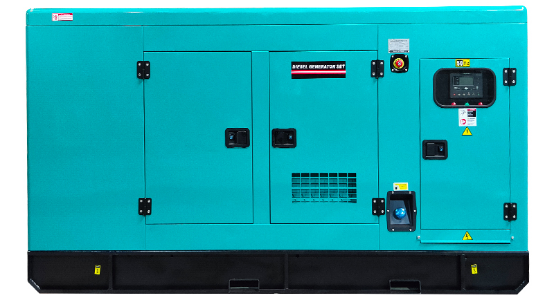
Parallel architecture is really a reliability design, and it is described with simple notation buyers should read fluently before comparing quotes.
"N" means just enough machines to carry the load — cheapest, but one failure is an outage. "N+1" adds one spare machine: any single unit can trip and the rest still carry the full load. Critical facilities go further: hospitals may run 2N (two fully independent systems), while a quarry or irrigation scheme may accept N with a maintenance contract instead. Each step up costs real money, so match the architecture to the consequence of downtime — a school can restart a day later, an industrial emergency diesel generator protecting a continuous process line cannot. The 500KVA silent generator installed at a school campus shows the single-set end of the spectrum; a parallel bank of containerized diesel generator units shows the other, where four machines carry a diesel power plant load and one can be serviced without stopping the site.
A parallel system that has never been deliberately tripped is a theory, not a redundancy. Insist on a factory acceptance test with all units synchronized at rated load, plus a site commissioning test that actually opens one breaker under load and verifies the remaining sets pick up without exceeding voltage dip limits. Reputable factories supply the test reports; buyers should file them with the handover documents.
This is the most frequent buyer question, and the answer surprises people: yes, with conditions.
Synchronization requires the same voltage, frequency and phase sequence — not the same engine brand. A Cummins-powered set can share a bus with a Weichai-powered set, and a 100 kVA unit can share with a 250 kVA unit, provided two things align. First, the alternators' voltage regulation characteristics must be compatible; modern AVR-equipped alternators from reputable makers handle this. Second, and more importantly, the controllers must be from the same family and speak the same protocol — load sharing happens between controllers, and mixing controller generations or brands is where cheap retrofit projects fail. The clean path is to buy the whole parallel system from one factory so engine variety (where wanted) is engineered in from the start rather than bolted on later. Longhong's engine lineup across Cummins, Weichai, Yuchai, Perkins, Volvo and Yunnei makes mixed-brand parallel banks a routine specification rather than an experiment.
Buyers expanding an existing parallel installation should send the factory the current controller models, alternator datasheets and single-line diagram. With those three documents, an experienced supplier can confirm compatibility before quoting — the difference between a smooth expansion and a switchgear rebuild you did not budget for.
The gensets are half the system; the electrical infrastructure between them is the other half, and it is where budgets are most often underestimated.
A complete parallel installation includes: a synchronizing controller per genset (or a master controller managing all units); motorized circuit breakers per set; a bus-bar assembly or a bus-tie arrangement if the plant wants to split into independent sections; metering and protection relays rated for the fault level of all units running together; and heavy cabling sized for the combined current. Protection deserves emphasis: fault current from four paralleled machines is roughly four times that of one, so breakers and relays must be selected for the paralleled fault level, not the single-set figure. Buyers comparing three-phase diesel generator offers for a parallel project should ask each supplier to quote the switchgear scope line by line — a quote that silently excludes it is not cheaper, just incomplete.
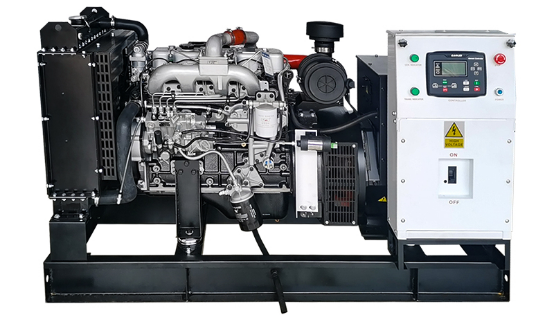
Parallel systems can stand behind an automatic transfer switch as a classic standby diesel generator bank, or — where regulations permit and the utility agrees — operate in parallel with the grid itself for peak shaving. Grid-parallel operation adds utility protection relays and approval processes, so treat it as a separate project decision, not a default. For most export buyers, the AMF arrangement is the practical norm: utility fails, all sets start, synchronize to each other, and the bus closes onto the load in a coordinated sequence. Units like the 64kW automatic generator already ship with AMF-ready controls at the smaller end of the range.
A fair comparison totals both architectures over the project life, not just the invoice.
Genset hardware per kVA is similar either way — two 100 kVA sets cost about the same as one 200 kVA set. The parallel system adds synchronizing controllers, motorized breakers and commissioning time; the single-set option may add cost in a larger transformer, heavier foundations and harder site logistics. Fuel economics usually favor parallel in variable-load facilities: staged operation keeps each running engine at 60–80% load, where fuel consumption per kWh is lowest, while a single oversized machine idles inefficiently overnight. Maintenance windows also favor parallel — one unit services while others carry the load, which for a quarry diesel backup power supply or a cold-chain warehouse can be the difference between a planned outage and a production stop. Add the avoided cost of one major outage and the parallel premium is frequently repaid before the second year, though each site's arithmetic differs.
As a working rule: total demand under ~250 kVA and standby duty — buy one set; 250–800 kVA with high uptime requirements or phased growth — price both architectures seriously; above 800 kVA or any base-load diesel power plant duty — parallel is the default engineering answer, and the discussion shifts to how many units, not whether. Longhong's export record includes both ends: the 750KVA Cummins generator delivered to Libya as a single-frame installation, and multi-unit banks shipped in stages to growing industrial clients.
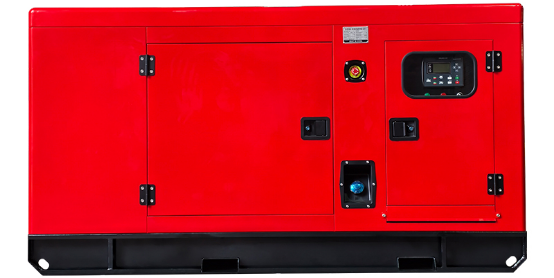
China's genset industry executes parallel projects daily — for telecom banks, mining camps and island power systems — and the price advantage is real. The specification discipline is what converts it into a system that works.
Beyond the standard five facts (load list, running hours, altitude and ambient temperature, voltage and frequency, enclosure preference), a parallel enquiry adds: the number of units and the redundancy target (N, N+1); the controller family requested; whether the plant needs bus-tie splitting; the fault-level assumptions for protection; and who performs commissioning — factory engineer on site, local contractor under remote supervision, or a hybrid. Ask explicitly for a factory acceptance test with all units synchronized and load-bank tested together, and for the CE and ISO certification documents covering the complete set. Buyers purchasing through Spanish-language channels ("generator electrico") or Commonwealth markets ("UK diesel genset" configurations) should require the same documents — the engineering is identical.
Three checks separate parallel-capable factories from single-set assemblers. First, ask for reference projects: multi-unit installations shipped and commissioned, with photos or site contacts — Longhong's export history across Cambodia, Vietnam, Myanmar, Tanzania and Libya, documented on the company profile page, is the kind of trail to look for. Second, ask which controller brands the factory stocks and programs in-house; genuine source factories answer with models and firmware, not brochures. Third, ask what is in stock: with 200+ units permanently available, a factory can start shipping the first machines while custom switchgear is being built — a scheduling advantage that matters on fast-track projects. The full range of parallel-ready frames, from the compact 80kW silent diesel generator to megawatt-class sets, is browsable in the diesel generator product catalog.
Parallel operation turns diesel generation from a single point of failure into a flexible, growable power system: machines start and stop with demand, one unit's failure is a service event instead of an outage, and capacity follows the business instead of predicting it. The price of that flexibility is engineering discipline — matched controllers, properly rated switchgear, real synchronization testing and an honest comparison against the single-set alternative. Specify those elements in writing, buy the whole system from one accountable factory, and a parallel bank will serve a site for decades. When you are ready to scope a project, Guangdong Longhong Electromechanical Equipment Co., Ltd. will size the bank, confirm controller compatibility, quote the complete switchgear scope and support commissioning — with test reports that prove the redundancy on paper before you ever need it in a storm.


