

 English
 العربية
 Español
 Русский
Industry News
Industry News

A modern shopping mall is a city within a building. Between lighting, HVAC, escalators, elevators, refrigeration, point-of-sale systems, security cameras, and fire safety equipment, even a five-minute power outage can cost thousands of dollars and endanger public safety. That is why facility managers across Asia, Africa, and the Middle East treat a shopping mall backup diesel genset as critical infrastructure rather than an optional accessory. This guide explains how to size, configure, and source a diesel generator set that keeps retail floors safe, cool, and profitable during grid failures.
Table of Contents
Shopping malls operate under a simple rule: if customers cannot see products comfortably, they will not buy. A standby diesel generator automatically restores electricity when the public grid fails, protecting revenue, reputation, and lives. Unlike a small residential generator for home, a mall unit must support hundreds of kilowatts of mixed load while starting within seconds.
A single hour of downtime in a midsize mall can halt food-court sales, disable card payment terminals, and spoil refrigerated inventory in supermarkets and restaurants. A properly sized emergency diesel generator keeps point-of-sale systems online, maintains ambient lighting, and prevents checkout queues from turning into exits. For mall operators, backup power is therefore a direct investment in daily turnover.
Building codes in most countries require emergency lighting, fire pumps, smoke-extraction fans, and public-address systems to remain operational during a blackout. A diesel power generator satisfies these life-safety loads independently of the grid. When paired with an automatic transfer switch, the genset starts, stabilizes voltage, and assumes critical load without human intervention.
Tropical and humid climates make air conditioning non-negotiable. Without a canopy diesel generator or open-frame unit on standby, rising temperatures can drive shoppers out within minutes and trigger health risks for elderly visitors. Cold-chain tenants such as supermarkets, pharmacies, and restaurants also rely on continuous refrigeration to avoid spoilage losses and regulatory violations.
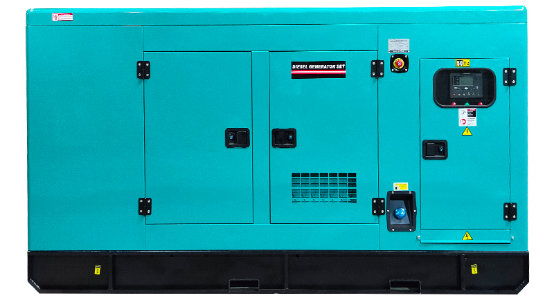
A 100kW silent canopy diesel generator set suitable for medium-sized shopping mall backup duty.
Oversizing wastes capital and fuel; undersizing causes voltage dips, overheating, and premature engine wear. Sizing a mall diesel generator set requires an accurate load inventory, a clear understanding of motor-starting currents, and a realistic allowance for future expansion.
Start with the mall's electrical single-line diagram. Separate loads into three categories: life-safety loads (fire pumps, emergency lighting, smoke fans), essential commercial loads (HVAC, escalators, elevators, refrigeration), and optional comfort loads (decorative lighting, fountain pumps, non-essential signage). A professional diesel generator manufacturer will ask for this list before recommending a kVA rating.
Escalators, chillers, and refrigeration compressors draw five to seven times their running current during startup. If the genset is sized only for steady-state load, the voltage dip during motor starting can trip variable-frequency drives and electronic payment systems. Use the largest motor-starting requirement as the ceiling, then add simultaneous running loads.
Not every load runs at full capacity at the same time. A diversity factor of 0.7 to 0.85 is common for malls, but conservative designers often plan for 0.9 because peak shopping hours coincide with peak cooling demand. Your chosen diesel generator supplier should confirm the factor against local electrical standards.
Malls renovate tenant spaces every few years. Selecting a genset with 15–20 percent spare capacity avoids a costly replacement when a new cinema, gym, or supermarket joins the tenant mix. A modular configuration using multiple synchronized industrial emergency diesel generators can also grow with the property.
Typical Mall Backup Power Ratings
Small community mall (5,000–10,000 m²): 80–150 kVA
Midsize regional mall (10,000–30,000 m²): 200–400 kVA
Large retail complex (30,000+ m²): 500–1,500 kVA or multiple synchronized sets
Beyond kilovolt-amperes, mall operators must evaluate enclosure type, control systems, fuel autonomy, and emission compliance. These specifications determine whether the power generator integrates cleanly into a busy commercial environment.
A canopy diesel generator is the default choice for malls because the weatherproof enclosure reduces noise by 15–25 dB compared with an open-frame unit. Noise limits near residential or commercial boundaries often require 65–75 dB at seven meters. Premium canopy sets with residential-grade silencers can achieve 60 dB or lower, making them suitable for rooftop or basement installations close to tenants.
Manual startup is unacceptable for malls. An auto-start diesel generator with an automatic transfer switch detects grid loss, cranks the engine, and transfers load within 10–30 seconds. For data centers or high-security zones inside the mall, an uninterruptible power supply bridges the gap during those seconds. Specifying a dual ATS arrangement with service-entrance rated switches adds redundancy.
Most mall codes require at least 24 to 48 hours of fuel autonomy at full load. Base fuel tanks integrated under the genset typically hold 8–12 hours; extended tanks or external bulk storage extend runtime. Diesel remains the fuel of choice for long runtime because it stores safely for months and offers higher energy density than gasoline or gas.
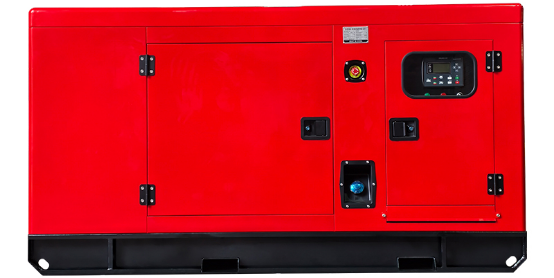
An 80kW silent diesel generator set ideal for small to midsize shopping centers and retail complexes.
China is one of the world's largest producers of diesel genset equipment, offering CE- and ISO-certified units at competitive prices. Working with a specialized diesel generator factory such as Guangdong Longhong Electromechanical Equipment gives mall developers access to a full product range from 3 kVA to 3,000 kVA, with engine choices including Cummins, Weichai, Yuchai, Perkins, Volvo, and Yunnei.
For shopping mall projects, the following product catalog options are particularly relevant:
100kW silent diesel generator — a popular mid-range choice for community malls and retail centers needing reliable standby power.
80kW silent diesel generator — compact canopy design for smaller malls, supermarkets, and department stores.
32kW silent diesel generator — suitable for auxiliary buildings, parking garages, and outdoor retail zones.
64kW automatic generator — equipped with auto-start controller for immediate response during grid failure.
For very large retail complexes, containerized diesel generator modules can be factory-built and delivered as plug-and-play power plants. These units include built-in fuel tanks, silencers, control rooms, and optional paralleling gear for N+1 redundancy.
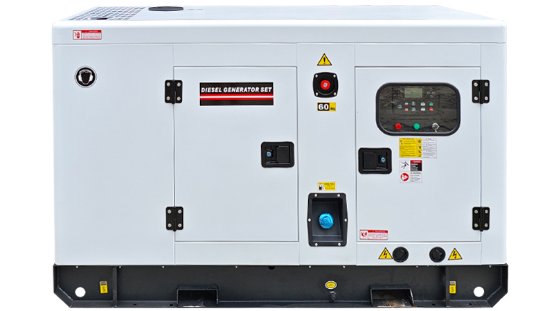
A 32kW silent diesel generator set for auxiliary mall loads, parking areas, and outdoor retail spaces.
Even the best diesel power plant will underperform if installed incorrectly. Mall installations must balance noise control, ventilation, fuel safety, and emissions.
Gensets are usually placed in basements, rooftop plant rooms, or dedicated outdoor compounds. Basement locations reduce noise impact on shoppers but demand robust exhaust ducting and cooling-air intake. Rooftop locations simplify ventilation but require weatherproof enclosures and anti-vibration mounts to protect the building structure.
Diesel engines reject roughly one-third of fuel energy as heat. The plant room must supply combustion air and dissipate radiator heat. A common rule is to provide 6–10 air changes per hour, with dedicated intake and exhaust louvers sized to the engine manufacturer's specification. In hot climates, adding an ambient-temperature derating factor ensures the genset reaches rated output on the hottest days.
Many cities now impose limits on particulate matter, nitrogen oxides, and noise. Cummins and Perkins engines generally meet Tier 2/3 or equivalent emission standards, while Weichai and Yuchai offer cost-effective solutions for regions with less stringent rules. Always request the engine's emission certificate and ensure the qualifications page lists relevant ISO and CE documentation.
Diesel fuel tanks must be double-walled or bunded to contain spills, with leak detection and fire-rated separation from the generator. Day tanks feeding the engine should be sized for 4–8 hours, while bulk tanks supply longer runtime. Fuel polishing systems remove water and particulates, extending engine life and preventing injector damage.
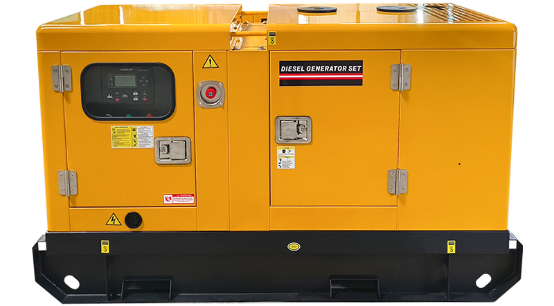
A compact 10-14kW silent diesel generator set for small retail units, kiosks, and mall auxiliary circuits.
A mall genset may sit idle for weeks, then be asked to carry full load instantly. Regular maintenance transforms a dormant machine into a trustworthy power outage backup power generator.
Weekly: Visual inspection, coolant and oil level checks, battery voltage verification, and a no-load exercise run of 15–20 minutes.
Monthly: Load-bank testing at 30–50 percent rated load to clear carbon deposits and verify alternator performance.
Every 250 hours or six months: Engine oil and filter change, fuel filter replacement, air filter inspection, and coolant additive testing.
Annually: Complete system audit including AVR calibration, ATS transfer test, exhaust insulation check, and control-panel firmware update.
Maintaining a service contract with the original diesel generator supplier or a certified local agent ensures genuine spare parts and factory-trained technicians. This is especially important for large silent generator installations serving schools, hospitals, and shopping malls.
A shopping mall backup diesel genset is not just a box of engine and alternator; it is a business-continuity tool that protects revenue, tenant relationships, and public safety. Correct sizing, thoughtful enclosure selection, ATS integration, and disciplined maintenance separate a reliable installation from a costly liability. By sourcing from an experienced China diesel generator manufacturer with CE and ISO credentials, mall developers gain access to proven diesel generator set technology at factory-direct value.
If you are planning a mall, retail complex, or commercial development, review your load profile today and request a technical proposal that matches capacity to real-world duty. The right emergency diesel generator will keep the lights on, the air cool, and the registers ringing—even when the grid goes dark.
About Guangdong Longhong Electromechanical Equipment Co., Ltd.
Established in 2010 in Guangdong, China, Longhong is a specialized diesel generator manufacturer and source factory with more than 20 years of industry experience. We produce diesel genset solutions from 3 kVA to 3,000 kVA, including open-frame, silent canopy, trailer, and containerized models powered by Cummins, Weichai, Yuchai, Perkins, Volvo, and Yunnei engines. With 200+ units in permanent stock, CE/ISO certification, and export experience across Cambodia, Vietnam, Myanmar, Tanzania, and Libya, we support shopping malls, hospitals, hotels, mines, and construction sites worldwide.
Browse our product catalog, review our qualifications, or learn more about us to discuss your next project.


