

 English
 العربية
 Español
 Русский
Industry News
Industry News

Purchase price is only the beginning of the ownership story. For most buyers, fuel is the single largest lifetime cost of a diesel generator set — often exceeding the machine's purchase price within the first two to three years of continuous operation. Whether you are sizing a standby diesel generator for a hotel, a construction site diesel generator set for a remote project, or a diesel power generator for an off-grid mining camp, understanding fuel consumption is essential for accurate budgeting. As a China diesel generator manufacturer with 20+ years of experience, Guangdong Longhong Electromechanical Equipment Co., Ltd. walks buyers through this calculation every day. This guide explains the formulas, provides consumption charts by rating, and shares practical fuel-saving strategies.
Two generators with the same power rating can differ dramatically in fuel efficiency, and that difference compounds every running hour. A diesel genset burning just 2 liters per hour more than a comparable model will consume an extra 17,500+ liters over a typical 2,500-hour annual duty cycle. At prevailing diesel prices, that is a five-figure sum — every single year.
Fuel consumption data affects four key decisions:
Reputable factories publish fuel consumption at 75% and 100% load in their technical datasheets. When comparing offers from any diesel generator supplier, always request these figures in writing and verify them during factory acceptance testing.
Fuel consumption for a diesel engine is expressed as specific fuel consumption (SFC), measured in grams per kilowatt-hour (g/kWh) or liters per kilowatt-hour (L/kWh). You can convert any genset datasheet into an easy monthly fuel budget using three steps.
Start with the widely used approximation for modern diesel generator sets:
Fuel consumption (L/h) ≈ Load (kW) × 0.25 to 0.31 L/kWh
Most modern engines achieve 0.25–0.31 L/kWh at 75–100% load. Larger, slower-running industrial engines sit at the lower end of that band; small air-cooled or lightly loaded units sit at the higher end. For quick budgeting, 0.3 L/kWh is a safe planning figure.
Suppose a hotel runs a 100 kW silent diesel generator for 4 hours per day during outage-prone season, at an average 80% load:
Repeating this math for your own load profile converts vague "fuel cost" worries into a concrete line item you can negotiate with suppliers and budget owners.
Engine datasheets usually state SFC in g/kWh. To convert to liters per hour: L/h = (g/kWh × kW) ÷ 845, using the density of diesel at roughly 0.845 kg/L. For example, an engine rated at 210 g/kWh producing 80 kW consumes about (210 × 80) ÷ 845 ≈ 19.9 L/h at that load point. Always apply the SFC figure at the correct load percentage — SFC at 50% load is typically 5–15% worse than at full load.
The table below provides indicative full-load consumption figures for common genset ratings in the Longhong product range, from compact single-phase diesel generator units for homes up to industrial three-phase diesel generator sets for factories and diesel power plants. Figures assume 50 Hz operation at 75–100% load with a modern engine; actual values depend on engine brand, cooling and load profile.
| Generator Rating | Typical Application | Approx. Fuel Use (L/h) |
|---|---|---|
| 10–14 kW | Home backup, small shops | 2.5 – 4.0 |
| 24 kW | Villas, clinics, small farms | 6.0 – 7.5 |
| 32 kW | Restaurants, guesthouses, irrigation | 8.0 – 10.0 |
| 40 kW | Construction sites, export projects | 10.0 – 12.5 |
| 64 kW | Factories, auto-start standby duty | 16.0 – 20.0 |
| 80 kW | Hotels, schools, malls | 20.0 – 25.0 |
| 100 kW | Industrial plants, large commercial | 25.0 – 31.0 |
| 400 kW / 500 kVA | Mining camps, prime power plants | 100.0 – 125.0 |
Note: These are planning averages, not warranty figures. Request the engine-specific SFC datasheet and a witnessed load-test report from your diesel generator factory before finalizing a fuel budget for critical projects.
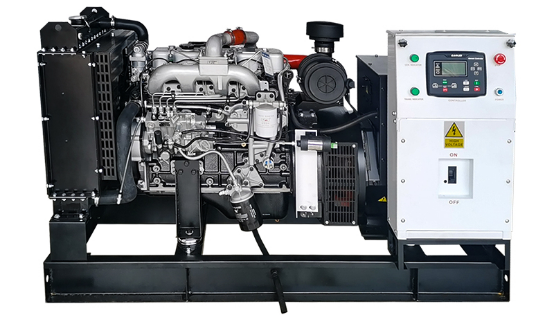
The chart above describes a healthy engine under controlled conditions. Real-world consumption can vary by 20–30% depending on the following factors.
Diesel engines are most efficient between 70% and 90% of rated load. At 25% load or below, combustion becomes incomplete: fuel is wasted, carbon builds up, and oil dilution follows — the classic wet-stacking failure mode. If your permanent load is low, consider load banks or splitting the duty between a small and a large set rather than running one big engine lightly loaded around the clock.
Electronic-governed engines with high-pressure common-rail injection (typical of modern Cummins, Perkins and Volvo platforms) measurably outperform older mechanically governed designs. Longhong builds sets with Cummins, Weichai, Yuchai, Perkins, Volvo and Yunnei engines so buyers can balance efficiency, budget and local parts availability.
A clogged air filter, worn injectors, incorrect valve clearance or degraded engine oil can each add several percent to fuel burn. Following a structured maintenance schedule — like the preventive care routines described in our generator knowledge base — keeps consumption close to factory figures throughout the engine's life.
High altitude and high temperature both thin the intake air, forcing longer injection durations for the same output. As a rule of thumb, derate output roughly 1% per 100 m of altitude above 1,000 m and 1–2% per 5°C above 25°C. Our Weichai gensets have been commissioned at 5,300 m altitude on the Tibetan plateau, where correct derating and turbocharging selection make the difference between a set that holds load and one that smokes and stalls.
Contaminated or low-cetane diesel reduces combustion efficiency and accelerates injector wear. Buy fuel from reputable depots, store it in clean tanks with water separation, and use biocide in tropical climates where microbial growth thrives at the fuel-water interface.
The best way to internalize these numbers is to apply them to the project types buyers bring to us most often. All examples use a delivered diesel price of US$1.05/L for illustration — substitute your local price.
An urban hotel protecting its guest experience installs an 80 kW silent diesel generator as its hotel diesel backup power generation equipment. Outage exposure averages 3 hours per day in the worst month, at 70% average load: consumption ≈ 80 × 0.7 × 0.28 ≈ 15.7 L/h, or roughly 1,420 L and US$1,490 for the month. The silent canopy matters as much as the fuel math here — the set sits near guest rooms, so the noise level must stay around 75 dB(A) at 7 m while it burns through those liters.
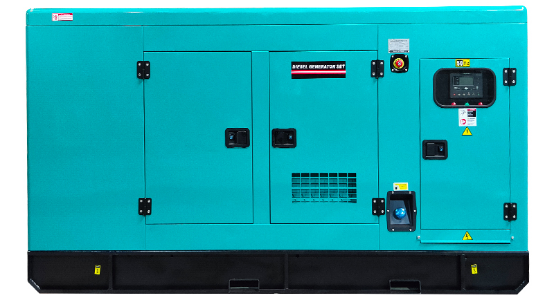
A contractor powering site offices, pumps and lighting on an overseas project rents rather than builds a grid connection. A 40 kW trailer type construction site generator running 10 hours a day at 65% average load consumes about 40 × 0.65 × 0.29 ≈ 7.5 L/h — roughly 75 L/day, or 2,250 L (≈US$2,360) per 30-day month. Fuel logistics dominate the operating plan: weekly deliveries, secure bunded storage and clean transfer pumps protect both the budget and the engines.
A farm drawing water through a 22 kW pump motor uses a 30 kW genset sized for motor-starting surge. Irrigation runs 6 hours daily in the dry season at 75% load: about 6.1 L/h → 37 L/day → roughly 1,100 L (≈US$1,155) per month. A purpose-built silent generator for farms with an oversized alternator handles the pump's starting current without oversizing the whole set — which is exactly how fuel is saved.
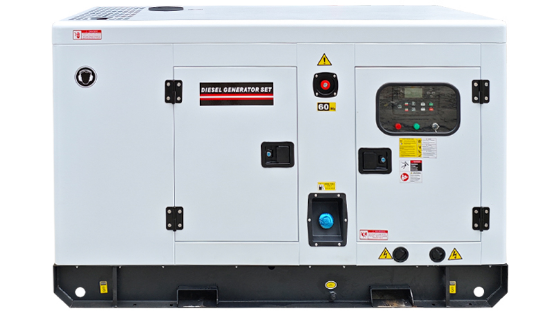
Fuel spending is the most controllable line in your power budget. These five measures consistently deliver double-digit savings for our customers.
The cheapest liter of diesel is the one you never burn. Size for actual running load plus motor-starting surge — not for the largest imaginable future expansion. A 24 kW silent diesel generator running at 75% load beats an oversized one loafing at 30% on every metric: fuel, engine health and capital cost.
An automatic transfer switch starts the genset only when the grid fails and shuts it down when power returns. For a power outage backup power generator in standby duty, auto-start control eliminates the single biggest fuel waste: engines idling for hours "just in case." Learn more in our guide to 64 kW automatic diesel generators with integrated ATS cabinets.
Air filters, fuel filters, injector condition and valve clearances directly move the consumption needle. A well-maintained engine burns 5–10% less fuel than a neglected one and avoids the unplanned outages that force hotels and factories onto rental sets at premium rates.
Water contamination, algae and oxidation degrade fuel before it ever reaches the engine. Keep tanks 95% full to limit condensation, drain water separators weekly, and rotate stored diesel every 6–12 months. Poor fuel storage quietly costs more than most maintenance budgets.
Log fuel level and running hours daily. A sudden rise in liters-per-hour against kilowatt-hours produced is your earliest warning of injector wear, air restriction or load imbalance. Modern control modules can report consumption data automatically, making anomalies visible before they become failures.
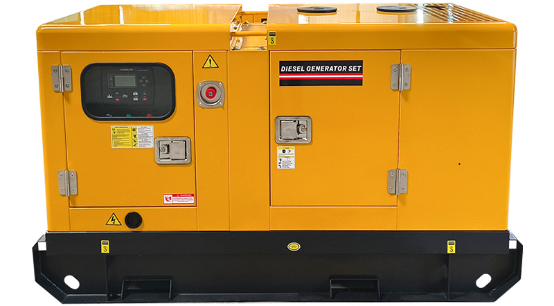
China offers the world's widest selection of genset configurations and engine platforms, but efficiency claims should always be verified. When evaluating a China diesel generator manufacturer, include the following in your checklist:
With 200+ units in permanent stock and exports to Cambodia, Vietnam, Myanmar, Tanzania, Libya and beyond, Longhong supports buyers from selection through commissioning with the technical data needed to lock in fuel budgets before the first liter is purchased.
Diesel generator fuel consumption is not an afterthought — it is the largest controllable cost of genset ownership and the foundation of sound project budgeting. Remember the planning rule of 0.25–0.31 L per kWh, size the set to run in its 70–90% efficiency sweet spot, automate start-stop with an ATS, and insist on witnessed load-test data before signing any contract. Buyers who master these numbers buy smaller, smarter machines that cost less every running hour. If you would like a fuel-consumption calculation tailored to your load profile, the engineering team at Longhong Power provides sizing and budgeting support free of charge with every quotation.


