

 English
 العربية
 Español
 Русский
Industry News
Industry News

Mining and quarry operations are among the most power-intensive industries on earth. From jaw crushers and conveyor belts to ventilation fans and dewatering pumps, every piece of equipment depends on a stable electricity supply — often in locations far beyond the reach of any utility grid. Selecting the right diesel generator set for these environments is not a matter of convenience; it is a matter of productivity, safety, and profitability. A poorly matched unit can mean halted production, spoiled explosives, flooded shafts, or endangered personnel. As a leading China diesel generator manufacturer with over two decades of experience, Longhong Power has supplied rugged, high-performance power generators to mining sites from Southeast Asia to Africa, including operations at altitudes exceeding 5,000 meters. This guide walks you through everything you need to know when specifying a quarry diesel backup power supply or a primary mining power source.
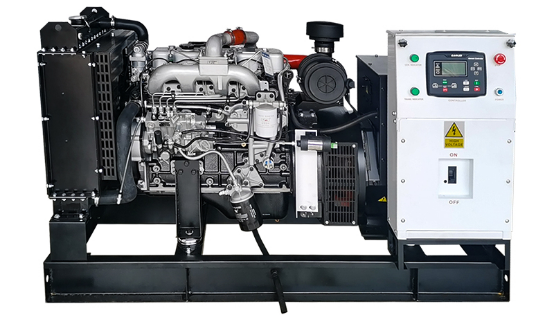
Figure 1: An open frame diesel generator set — its exposed layout allows rapid maintenance access in remote mining environments where downtime is costly.
In a surface quarry or underground mine, a power outage is not just an inconvenience — it can cascade into a full-scale operational emergency. Conveyor belts loaded with ore can jam. Ventilation fans in underground shafts can stop, allowing dangerous gases to accumulate. Dewatering pumps can fail, flooding lower levels within hours. A single hour of unplanned downtime at a mid-sized operation can cost tens of thousands of dollars in lost production, and that figure climbs sharply for large-scale extraction sites. This is why an industrial emergency diesel generator is not optional equipment — it is critical infrastructure.
The stakes are even higher when you consider that many mining operations run continuously, 24 hours a day, 7 days a week. Any gap in power means crushers sit idle, haul trucks cannot refuel at electric pumps, and security lighting goes dark. A properly specified engineering emergency diesel generator set ensures that essential loads keep running even when grid power drops, protecting both your output and your people.
Many quarries and mines are located in remote areas — mountain passes, desert plains, or jungle interiors — where utility grid connections are unreliable or entirely absent. In these scenarios, the diesel generator is not a backup; it is the primary power source, running for thousands of hours per year under harsh conditions: extreme temperatures, high dust levels, humidity, and sometimes altitude well above 3,000 meters.
These conditions place extraordinary demands on a diesel power generator. Standard commercial units, designed for occasional standby duty in temperate climates, will not survive. What you need is a purpose-built mining generator with heavy-duty filtration, robust cooling, and an engine proven to deliver sustained output under adverse conditions. Longhong Power's product catalog includes units specifically configured for these demanding environments, with power ratings from 3 KVA to 3,000 KVA.
Mining sites expose equipment to dust, vibration, moisture, and temperature swings that would destroy ordinary generators within weeks. A mining-grade diesel genset must feature heavy-duty air filtration to prevent abrasive dust from entering the combustion chamber, reinforced mounting systems to absorb vibration from nearby crushers and haul trucks, and corrosion-resistant enclosures for high-humidity or coastal environments. Open frame designs are often preferred for primary mining power because they allow technicians to access every component quickly — when a critical pump or conveyor is down, you cannot afford to spend hours removing panels to reach a fuel filter.
Altitude is one of the most overlooked factors in mining generator selection. As elevation increases, air density decreases, which means less oxygen reaches the engine per combustion cycle. A naturally aspirated engine that produces 100 kW at sea level may only deliver 70 kW at 4,000 meters. Turbocharged engines compensate partially, but even they lose output above 2,500 meters. If your mine or quarry sits at altitude — as many do in the Andes, the Tibetan Plateau, or highland Africa — you must specify a generator derated for your elevation, or risk chronic underperformance. This is exactly the scenario Longhong Power addressed in a real mining project at 5,300 meters altitude, where a Weichai-powered generator delivered reliable output under extreme conditions.
When a generator runs 16 or 24 hours a day as a primary power source, fuel consumption becomes a dominant operating cost. A difference of just 5% in specific fuel consumption between two engines can translate to thousands of liters of diesel per month at a large site. Modern electronically governed engines from brands like Cummins, Weichai, and Volvo offer significant fuel economy advantages over older mechanically governed units. When evaluating a construction site diesel generator set for mining duty, always ask for the manufacturer's fuel consumption curve at the loads you expect to run, not just the rated-load figure.
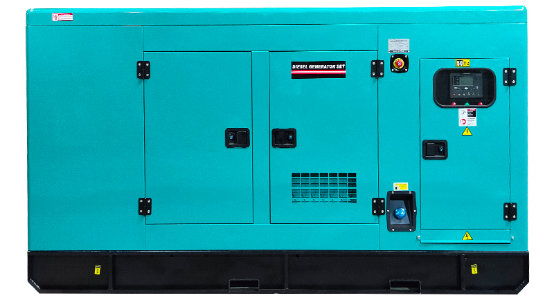
Figure 2: A 100kW silent diesel generator — ideal for powering site offices, lighting systems, and enclosed processing facilities where noise control matters.
Open frame generators are the workhorse of mining power. With no enclosure to restrict access, technicians can perform daily inspections, oil changes, and filter replacements quickly. This design also allows better airflow for cooling, which matters when ambient temperatures are high. The trade-off is noise — open frame units are loud, typically 85 to 100 dB at 7 meters. For primary power at a remote extraction face or crusher pad, this is usually acceptable. For an auto-start diesel generator positioned near a mine office or worker accommodation, a silent version is the better choice. Explore our 100kW diesel generator for a mid-range option suitable for both open-pit and underground auxiliary power.
Not every mining application tolerates high noise. Workshops, laboratories, employee dormitories, and communication rooms need quieter power. A canopy diesel generator reduces noise to 65–75 dB at 7 meters while also protecting the engine from rain, dust, and wind-blown debris. Longhong Power offers silent models across a wide power range — for example, the 80kW silent diesel generator is a popular choice for medium-sized site facilities, while the 32kW silent generator handles smaller loads like lighting circuits and communication racks.
For mines in extreme environments — arctic cold, desert heat, or corrosive coastal air — a containerized diesel generator offers the highest level of protection. The generator is housed inside a standard shipping container with integrated ventilation, sound attenuation, and sometimes climate control. This design allows the unit to be transported by standard logistics, locked for security, and operated without a dedicated generator room. Containerized units are also easier to relocate as a mine expands or a quarry moves to a new extraction face.
Many quarrying operations are project-based — you extract material from one location, then move to the next as the deposit is exhausted. A mobile trailer diesel generator allows you to relocate your power source without dismantling it. Equipped with road-legal axles, brakes, lighting, and a towing hitch, these units can be dragged behind a truck from one site to the next. This is also the preferred format for trailer type construction site generator applications where temporary power is needed for weeks or months at multiple locations. Longhong Power's 40kW export diesel generator is a compact, transportable option for smaller mobile deployments.
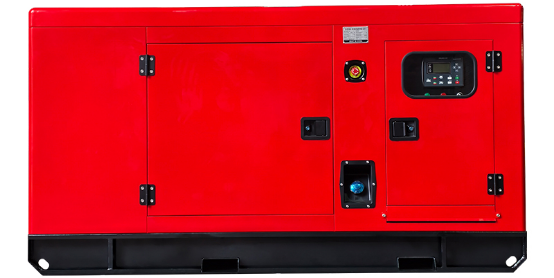
Figure 3: An 80kW silent diesel generator — its weatherproof canopy protects internal components from quarry dust and rain while keeping noise below 75 dB.
Sizing a mining generator starts with a load inventory. List every device the generator will power: crushers, screens, conveyors, pumps, fans, lighting, welders, and any planned future equipment. For each item, note the rated power in kW and whether it runs continuously, intermittently, or only during startup. Sum the running loads, then add a diversity factor — typically 0.7 to 0.85 — since not all equipment runs at full capacity simultaneously. The result is your standby running load.
Electric motors — the backbone of mining equipment — draw 3 to 7 times their running current during the first few seconds of startup. This inrush can momentarily overload an undersized generator, causing voltage dips that trip breakers or damage sensitive electronics. When sizing your three-phase diesel generator, you must account for the largest motor's starting current, not just its running power. A common rule of thumb: size the generator so that its standby rating is at least 1.5 to 2 times the sum of running loads plus the starting surge of the largest motor. If your largest motor starts under load — as a conveyor belt full of ore would — use the higher multiplier.
For smaller mining auxiliary loads — lighting, communication, small pumps — a single-phase diesel generator may suffice. But for any motor-driven equipment above about 15 kW, three-phase power is standard. If you are unsure which configuration you need, our team at Longhong Power can review your load list and recommend the optimal diesel power plant configuration. With over 200 units in permanent stock, we can also deliver quickly — critical when a mine is losing money every hour it sits without power.
The engine is the heart of any generator, and mining duty places unique demands on it. Longhong Power partners with the world's most respected engine brands to match the right powerplant to each application:
Cummins: The global benchmark for mining generators. Known for exceptional durability, wide parts availability, and proven performance in extreme conditions. Our Libya 750KVA Cummins export project demonstrates how these engines perform in demanding international mining operations.
Weichai: A cost-effective Chinese engine with excellent torque characteristics and proven reliability in heavy-duty applications. Weichai engines are particularly well-suited to high-altitude mining — as demonstrated in our mining project at 5,300 meters.
Yuchai: Another strong Chinese option, offering good fuel economy and competitive pricing for mid-range power requirements.
Perkins: A British heritage engine known for compact design and smooth performance, favored for enclosed or containerized installations.
Volvo: Premium Swedish engineering with outstanding fuel efficiency and low emissions — ideal for mines operating under strict environmental regulations.
Yunnei: A value-oriented Chinese engine for smaller generators, suitable for auxiliary loads and remote lighting circuits.
Choosing the right brand is not just about the engine — it is also about parts and service availability in your region. A Cummins or Weichai engine can be serviced in virtually every mining country in the world, which minimizes downtime when filters, injectors, or gaskets are needed. As an established China diesel generator factory, Longhong Power helps international buyers select the engine brand that offers the best balance of performance, price, and local serviceability for their specific mining location.
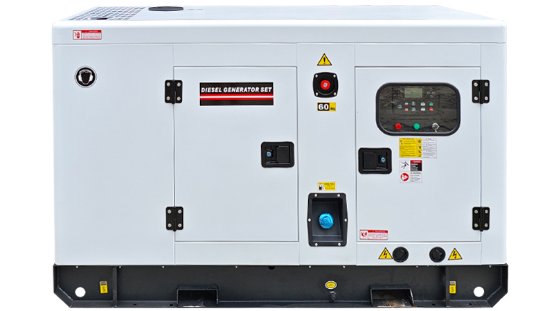
Figure 4: A 32kW silent diesel generator — compact enough for auxiliary mining loads such as lighting towers, communication racks, and small pumping stations.
Mining environments accelerate wear on every component. Dust clogs air filters within days instead of months. Vibration loosens fasteners and electrical connections. Humidity corrodes terminals. To keep your power outage backup power generator ready when it matters, follow these field-proven practices:
Double your air filter inspection frequency. In dusty quarry environments, check and clean air filters daily. Consider heavy-duty two-stage filtration or pre-cleaners for sites with extreme dust.
Monitor oil condition closely. Dust ingress and high operating temperatures degrade oil faster in mining duty. Sample oil every 250 hours and change it at the first sign of contamination, not just on a fixed schedule.
Secure all electrical connections. Use lock washers, thread-locking compound, and vibration-damping mounts. Check torque on alternator terminals and battery connections weekly.
Keep fuel clean and dry. Mining sites often store diesel in harsh conditions. Use water-separating filters and drain the tank sump regularly to prevent microbial growth that can clog injectors.
Test auto-start and ATS systems monthly. If your generator is configured for automatic mains failure (AMF) operation, simulate a grid failure regularly to confirm the transfer switch and starting system respond correctly.
Maintain a critical spares kit on site. At remote locations, waiting for a filter or belt to be flown in can mean days of downtime. Stock air filters, oil filters, fuel filters, belts, and common sensors for every generator on site.
All Longhong Power generators ship with comprehensive operation and maintenance manuals, and our team provides remote technical support to mining customers worldwide. Our CE and ISO certifications confirm that every unit meets international quality and safety standards — essential when your operation is subject to regulatory inspections or insurance audits.
One of the most challenging projects Longhong Power has delivered involved a mining operation located at 5,300 meters above sea level — one of the highest mining sites in the world. At that altitude, air density is roughly 55% of sea-level values, which dramatically reduces the oxygen available for combustion. Standard engines would lose 30–40% of their rated output and risk stalling under load.
Longhong Power engineers specified a Weichai-powered generator with a turbocharger matched to the altitude and an oversized intercooler to maximize charge-air density. The cooling system was upgraded with a larger radiator and high-flow fan to compensate for the thinner air's reduced heat-carrying capacity. The fuel system was recalibrated to maintain the correct air-fuel ratio at reduced oxygen levels. The result: a generator that started reliably, maintained stable voltage and frequency under varying loads, and has operated continuously in one of the harshest environments on the planet. You can read the full details of this project here.
This project illustrates a critical principle: when selecting a generator for mining, do not assume that a standard off-the-shelf unit will perform adequately. Each site has unique altitude, temperature, dust, and load characteristics that demand engineering review. A Tanzania 100KVA Cummins export project on the other end of the spectrum — sea-level, tropical heat, and high humidity — required entirely different configurations: enhanced corrosion protection, oversized cooling, and tropical-grade electrical insulation.
Selecting the right diesel generator for mining and quarry operations requires careful consideration of load requirements, environmental conditions, engine brand, enclosure type, and maintenance strategy. The cost of getting it wrong — lost production, safety hazards, equipment damage — far exceeds the effort of getting it right. Key takeaways:
Match the generator type to the application: open frame for primary power and easy access, silent/canopy for noise-sensitive areas, containerized for extreme conditions, and trailer-mounted for mobile operations.
Size for motor starting currents, not just running loads — and derate for altitude if your site is above 1,000 meters.
Choose an engine brand with proven mining performance and local parts availability — Cummins, Weichai, Yuchai, Perkins, Volvo, and Yunnei all have strengths suited to different scenarios.
Invest in maintenance from day one: daily filter checks, oil sampling, vibration-proofed connections, and on-site spares.
Work with a manufacturer who understands mining environments and can engineer site-specific solutions.
Longhong Power has been manufacturing diesel generators since 2010, with over 20 years of accumulated engineering experience. Our products span 3 KVA to 3,000 KVA, powered by the world's leading engine brands, and we hold CE and ISO certifications. With 200+ units in permanent stock and exports to Cambodia, Vietnam, Myanmar, Tanzania, Libya, and beyond, we have the production capacity and export experience to serve mining operations worldwide. Whether you need a primary power source for a remote extraction site or a standby diesel generator for a processing facility, our engineering team is ready to help you specify the right solution. Contact us today to discuss your mining power requirements.
Guangdong Longhong Electromechanical Equipment Co., Ltd. is a China diesel generator manufacturer established in 2010 in Guangdong, China. With over 20 years of industry experience, we produce open frame, silent/canopy, trailer, and containerized diesel generators from 3 KVA to 3,000 KVA. Our engines are sourced from world-renowned brands including Cummins, Weichai, Yuchai, Perkins, Volvo, and Yunnei. We hold CE and ISO certifications and maintain 200+ units in permanent stock for rapid delivery. Our generators have been exported to Cambodia, Vietnam, Myanmar, Tanzania, Libya, and many other countries. Learn more about our company or browse our full product catalog to find the right generator for your mining operation.


