

 English
 العربية
 Español
 Русский
Industry News
Industry News

Modern farming runs on electricity. Irrigation pumps, ventilation fans, milking machines, refrigerated milk tanks, incubators, grain dryers and cold-storage rooms all depend on a stable power supply — and many farms sit at the very end of the grid, where outages are frequent and voltage can be unstable. A single summer night without ventilation fans can wipe out an entire poultry house; a day without power can spoil a season's harvest in the dryer or cold room. That is why a properly sized farm diesel generator is not an optional accessory but core production equipment.
This buyer's guide explains how to choose a diesel generator set for agricultural operations: which loads matter most, how to size the machine, when to choose a silent canopy diesel generator over an open-frame unit, and what to check when buying from a China diesel generator manufacturer. Guangdong Longhong Electromechanical Equipment Co., Ltd. has built diesel genset solutions from 3 KVA to 3000 KVA since 2010, powered by Cummins, Weichai, Yuchai, Perkins, Volvo and Yunnei engines, with CE/ISO certification and over 200 units in permanent stock for fast delivery.
Agriculture is one of the most outage-sensitive industries in the world, for three reasons. First, farms are usually located far from urban substations, so rural feeders are long, exposed to storms, and slower to repair. Second, many agricultural processes are time-critical: livestock cannot wait, and crops at harvest cannot pause. Third, the financial loss is not linear — a two-hour outage during milking or during a heat wave costs far more than twice a one-hour outage.
Consider the real consequences of a power outage on a working farm:
A standby diesel generator converts all of these risks into a manageable engineering problem. Unlike a small gasoline unit, a diesel power generator is built to run for days, handles heavy motor loads, and burns safer, less flammable fuel that stores well on farms. For remote farms and off-grid plots, a diesel genset is often the primary power source rather than a backup — the same principle behind the remote-site installations Longhong has delivered, such as the 100 KVA Cummins generator exported to Tanzania for off-grid operations.
Before comparing generator models, make a complete list of what must keep running when the grid fails. Farm loads fall into four broad categories, and each behaves differently:
The table below gives realistic starting points drawn from typical farm installations. Always confirm the final size with a proper load survey — but it shows how different operations map to different machine classes:
| Farm Operation | Typical Backup Load | Suggested Genset |
|---|---|---|
| Farmhouse, lighting, water pump, small workshop | 8-12 kW | 10-14 kW silent generator (single-phase) |
| One poultry/pig shed: fans, feeding lines, controls | 15-22 kW | 20 kW or 24 kW silent diesel generator |
| Dairy parlor, milk tank, barn water system | 25-30 kW | 30 kW silent generator for farms / 32 kW silent generator |
| Mixed farm with irrigation pumps and drying | 60-80 kW | 80 kW silent diesel generator |
| Large estate, packing house, cold-storage block | 90-120 kW | 100 kW diesel generator (three-phase) |
For buyers comparing options across the full range, the complete diesel generator product catalog lists every model from compact single-phase units to industrial three-phase sets, each with engine brand, output and enclosure options.
Sizing mistakes on farms usually go in one of two directions: an undersized genset that stalls when the irrigation pump starts, or an oversized genset that wastes fuel and suffers wet stacking when it runs half-loaded for hours. A disciplined three-step sizing process avoids both.
Walk the farm and record every device that must run during an outage: its rated power, whether it is single-phase or three-phase, and whether it starts automatically. Separate essential loads (livestock ventilation, milking, milk cooling, water supply, cold storage) from discretionary ones (workshop tools, barn lighting, battery chargers). Only the essential list sets the minimum genset size; the discretionary list can be shed during an emergency.
The single largest motor on the farm — usually a deep-well irrigation pump or a grain dryer fan — deserves special attention. If it starts direct-on-line (DOL), the generator must supply five to seven times the motor's rated current without excessive voltage dip. Tell the manufacturer the largest motor's kW rating and its starting method (DOL, star-delta or soft starter) so they can verify the alternator's subtransient reactance. A soft starter or sequential start panel is often cheaper than upsizing the generator by one full frame.
Add 20–25 percent headroom to the essential load total for future equipment, hot-weather derating and fuel-quality variation. On the electrical side, farmhouses and small sheds typically need a single-phase diesel generator (230 V), while irrigation pumps, dryers and larger three-phase motors require a three-phase diesel generator (400 V). Many mixed farms solve this elegantly with one three-phase genset plus a small single-phase distribution board for the domestic circuits. More detail on this decision is covered in the Longhong industry news library, where phase selection for different applications is discussed in depth.
Both enclosure types have a legitimate place on farms, and the right choice depends on where the machine will stand and who lives nearby.
A canopy diesel generator houses the engine and alternator in a weatherproof steel enclosure lined with acoustic insulation, typically reducing noise by 15–25 dB compared with an open frame. For most farm installations this is the better choice, for four practical reasons: it stands outdoors year-round without a shed; it keeps rain, dust, straw and rodents away from the alternator; it prevents noise stress to livestock housed a few meters away; and it keeps the peace with family members and neighbors who live within earshot of the yard. The 30 kW silent generator designed for farms is a good example — a compact canopy unit that sits beside a barn and starts automatically without disturbing the animals.
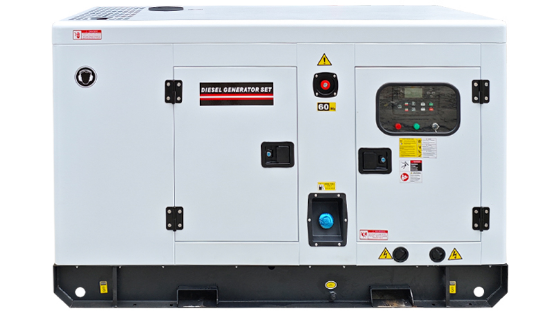
An open-frame unit still makes sense in specific spots: a pump station in the middle of a field far from any dwelling, a fenced power yard on a large estate, or as the prime mover on remote land-clearing projects. Open frames cost less, weigh less and are easier to service — but they offer no protection against weather or theft, so they need a shelter of some kind in most climates.
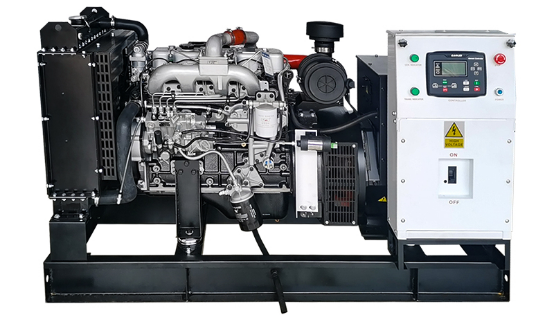
Whatever the enclosure, corrosion protection matters on farms: fertilizer, ammonia from livestock housing and humid barn air attack thin paint quickly. Specify powder-coated steel, stainless fasteners and sealed electrical cabinets — standard features on Longhong canopy units built for agricultural export markets.
Livestock does not wait for a farmer to walk to the shed and pull a starter rope. Outages happen at 3 a.m., during storms, when nobody is on the farm. That is why modern farm installations specify an auto-start diesel generator paired with an ATS (automatic transfer switch). When the ATS detects a grid failure, it signals the genset, which cranks and reaches stable voltage in 10–15 seconds; when grid power returns, it switches the farm back and cools the engine down.
For unattended reliability, specify these options when ordering:
Models like the 64 kW automatic generator come with an auto-start control module as standard, and Longhong can pair any genset in the range with a matching ATS cabinet. For buyers who want to understand the technology in more depth, the news section includes a dedicated guide to ATS selection and wiring.
A farm generator is only as dependable as the fuel and care behind it. Diesel stores far better than gasoline — but it still degrades. Plan for these basics:
Size the day tank for at least 24–72 hours of continuous essential-load running, and refill promptly after every major use. Store fuel in a clean, shaded tank, add a biocide if the fuel will sit longer than six months, and drain water from the tank bottom each month. Farm diesel systems fail from contaminated fuel far more often than from engine faults.
Run the genset under load for 30 minutes weekly or fortnightly. Exercise runs circulate oil, recharge the battery, dry out the alternator windings and reveal problems before an emergency. Keep a simple logbook: date, running hours, fuel added, any alarms. A genset that sits untouched for a year will disappoint precisely when it is needed.
In cold regions, winter starting is the main failure mode. Fit a block heater, keep the battery on a float charger, use the correct seasonal oil grade, and consider winter-grade diesel or anti-gel additive below −10°C. Canopy enclosures help here too — they trap residual engine heat and shield the block heater from wind.
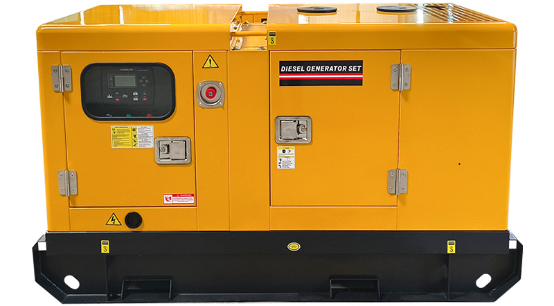
Farm buyers around the world increasingly source gensets directly from Chinese factories, and the value proposition is real: factory-direct pricing, short lead times from permanent stock, and the freedom to specify the engine brand, enclosure color, control system and socket configuration. The critical task is separating genuine manufacturers from trading companies and low-grade assemblers. Before placing an order, verify:
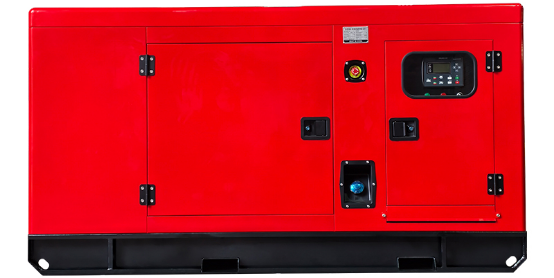
Finally, weigh the total package, not just the unit price: spare-parts availability, warranty terms (12 months or 1,000 running hours is standard), technical support in your time zone, and shipping documentation. A slightly higher quote from an established factory with 200+ units in stock usually beats the cheapest offer once a season of downtime is factored in.
A farm is a 24-hour biological production system, and electricity is its heartbeat. Choosing the right farm diesel generator comes down to four disciplined steps: list the essential loads, size for the largest motor with adequate headroom, choose a silent canopy where people and animals are close, and insist on auto-start capability for unattended protection. Source from a manufacturer who proves its credentials — not just its price.
Guangdong Longhong Electromechanical Equipment Co., Ltd. supplies farm-ready diesel power generator sets from 3 KVA to 3000 KVA — open frame, silent canopy, trailer and containerized — backed by CE/ISO certification, 200+ units in permanent stock and export experience across Southeast Asia, Africa and the Middle East. Browse the full generator catalog or contact the sales team for a free load-assessment and quotation tailored to your farm.


